By Dan Larson · April 25, 2026
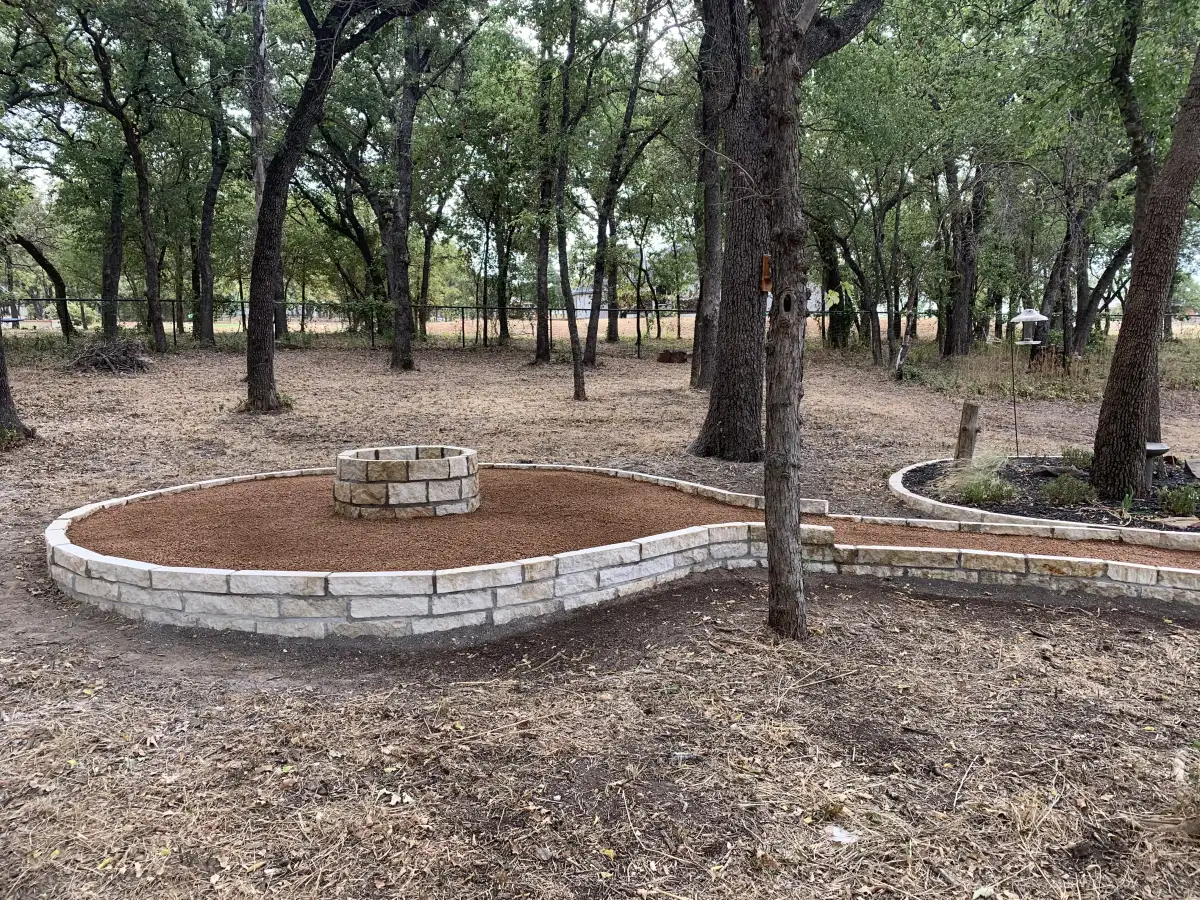
A well-built fire pit is one of the highest-return outdoor investments you can make in Weatherford. Our mild fall and winter climate means homeowners use fire features roughly 8 to 9 months of the year, from the first cool October evening through late April. That kind of year-round utility makes a fire pit more than a decorative element. It becomes the anchor of your outdoor living space — the place where your family actually gathers after dinner, where neighbors pull up chairs on Friday nights, and where holidays get that extra warmth that no amount of patio furniture can replicate.
But building a fire pit that performs well in Parker County requires planning that goes beyond picking a shape and stacking stones. The expansive clay soil here moves with the seasons. Summer heat and burn ban restrictions shape when and how you can use an open flame. And the materials you choose determine whether your fire feature looks the same in year ten as it did on day one, or whether it cracks, shifts, and deteriorates after a few freeze-thaw cycles.
This guide covers everything Weatherford homeowners need to consider before building a fire pit — from the ground up.
Choosing the Right Location
Placement is the single most important decision in any fire feature project. Get it wrong, and you either create a safety hazard or build something your family never actually uses because it is too far from the house, too exposed to wind, or too close to the neighbor's fence line.
Setback Requirements
Parker County and the City of Weatherford generally require residential fire pits to sit at least 10 to 25 feet from structures, property lines, and overhead obstructions like tree canopies and power lines. The exact requirement depends on whether you are in city limits, in an unincorporated area of the county, or within an HOA-governed subdivision like those along the Brock Highway corridor or in the Walsh Ranch development near Aledo. We evaluate your specific property for proper setback compliance during every free consultation.
Wind and Smoke Patterns
Weatherford's prevailing winds blow from the south and southwest for most of the year. This means you want to position seating on the north or northeast side of the fire pit so smoke blows away from your gathering area rather than directly into it. Properties in the elevated areas along FM 920 and near Tin Top tend to get stronger gusts than those in the sheltered creek bottoms closer to town. Understanding your property's specific wind patterns prevents the frustration of a fire pit that fills your patio with smoke every time you light it.
Proximity to the House
There is a balance between safety and usability. A fire pit 50 feet from the back door may satisfy every setback rule but nobody will walk out there on a cold January night to use it. The ideal placement is 15 to 25 feet from your covered patio or back entrance — close enough to feel connected to the house, far enough to meet clearance requirements. We often integrate fire pits into larger hardscape designs with flagstone pathways that create a natural flow between your indoor and outdoor living spaces.
Materials That Last in North Texas
Not all fire pit materials perform equally in Parker County's climate. The combination of summer temperatures exceeding 105 degrees, winter lows dipping into the teens, and the constant thermal cycling of the fire itself puts severe stress on construction materials.
Natural Stone: The Gold Standard
Texas limestone and sandstone are the most durable and visually appropriate materials for permanent fire pits in the Weatherford area. These stones handle repeated heating and cooling without cracking or spalling because they formed under similar geological conditions — they are literally native to this environment. Limestone offers warm tan and cream tones that complement the natural landscape. Sandstone provides richer brown and rust hues. Both develop a beautiful patina over time that manufactured materials cannot replicate.
Materials to Avoid
Standard concrete block is the most common mistake we see in DIY fire pit construction around Weatherford. Regular concrete contains moisture that can cause blocks to crack, pop, or even explode under sustained high heat. River rock and porous stones like pumice carry the same risk — trapped moisture expands when heated, creating a genuine safety hazard. If you want the look of concrete, use fire-rated refractory blocks specifically engineered for high-temperature applications. They cost more upfront but eliminate the cracking and safety issues entirely.
Fire-Rated Interior Materials
Regardless of the exterior stone you choose, the interior ring of a fire pit should always use fire-rated refractory materials — fire brick, refractory mortar, and heat-resistant steel rings. These materials are designed to withstand direct flame contact at temperatures exceeding 1,800 degrees Fahrenheit without degrading. The exterior stone serves as the aesthetic shell and structural wall, while the interior refractory layer does the actual work of containing the fire safely. This dual-layer approach is how we build every custom fire feature at L&L.
Wood-Burning vs. Gas Fire Pits
This is one of the first questions homeowners ask, and the answer depends on how you plan to use your fire feature and how much maintenance you want to manage.
Wood-Burning Fire Pits
Wood-burning fire pits deliver the full sensory experience — the crackle, the smell, the dancing flames. They are simpler to build (no gas line required), less expensive upfront, and produce more radiant heat. The tradeoffs: you need to source and store firewood, manage ash cleanup after each use, and comply with Parker County burn ban restrictions during dry periods. Burn bans are common in late summer when conditions are driest, typically running from July through September in severe drought years. During active burn bans, wood-burning fire pits cannot be used at all.
Gas Fire Pits
Natural gas or propane fire pits offer instant on-off convenience with no ash, no smoke, and no burn ban restrictions (gas fire features with a manual shutoff valve are exempt from most Parker County burn bans). They produce a consistent, controlled flame and can incorporate fire glass, lava rock, or ceramic log sets for different visual effects. The tradeoff: installation costs more because it requires running a gas line from your home's natural gas supply, which may need a plumbing permit in Weatherford city limits. Propane models avoid the gas line requirement but add the recurring cost and inconvenience of tank refills.
Which to Choose
For most Weatherford homeowners, we recommend natural gas if your home already has a gas supply line (most properties in newer subdivisions like Crown Pointe in Willow Park and Morningstar in Aledo do). The burn ban exemption alone makes gas the more practical choice for year-round use. If you are on a rural property outside city limits — particularly in the Peaster, Tin Top, or Springtown areas where natural gas service may not be available — a wood-burning pit with a backup propane insert gives you the best of both worlds.
What a Fire Pit Costs in Weatherford
Fire pit costs vary significantly based on size, materials, fuel type, and surrounding features. Here is what Weatherford homeowners can expect at each tier.
Basic (Starting Around $1,500 to $2,500)
A basic custom fire pit includes a 36-inch diameter stone ring, compacted gravel drainage base, fire-rated interior, and natural stone exterior. This size comfortably seats 4 to 6 people and works well as a standalone feature in a backyard or incorporated into an existing patio layout. This range covers wood-burning designs without gas line work.
Mid-Range ($2,500 to $5,000)
Mid-range projects add larger diameter pits (42 to 48 inches), integrated seating walls, built-in wood storage niches, or a natural gas connection. The seating wall is one of the most popular add-ons we install because it eliminates the need for separate patio chairs around the fire — the stone wall becomes both functional seating and an architectural element that extends the fire pit's visual presence.
Premium ($5,000 and Up)
Premium fire feature installations incorporate the pit into a complete outdoor living space — a flagstone patio surround, stone veneer seating walls on multiple sides, landscape lighting, and integrated plantings. These projects often include custom pathways connecting the fire feature to the house and other landscape elements. At this level, the fire pit is not an addition to your landscape. It is the centerpiece that the entire outdoor design revolves around.
Building on Parker County Clay Soil
Every permanent structure built on Weatherford's expansive clay soil — whether it is a house foundation, a retaining wall, or a fire pit — needs to account for ground movement. Parker County sits on Walnut Clay and Eagle Ford Shale formations that swell dramatically when saturated and shrink during drought. This seasonal movement can shift, crack, and destroy a fire pit that was built directly on grade without proper base preparation.
Our installation process starts with excavating 6 to 8 inches below grade and backfilling with compacted crushed limestone aggregate. This base layer serves two purposes: it provides a stable, non-expansive foundation that resists the swell-shrink cycle of the surrounding clay, and it creates a drainage layer that prevents water from pooling under the fire pit structure. We compact the base in 2-inch lifts using a plate compactor to achieve 95% compaction density — the same standard used for commercial construction.
Skipping base preparation is the number one reason DIY fire pits in North Texas develop cracks within 2 to 3 years. The stones may look fine on the surface, but the clay underneath is moving with every wet-dry cycle, slowly pulling the structure apart. Proper base work adds a few hundred dollars to a project but saves thousands in eventual repair or replacement.
Permits and Regulations
Weatherford and Parker County generally do not require a permit for standard residential wood-burning fire pits that meet setback requirements. Gas-fueled fire features connected to a natural gas supply line may require a plumbing permit, particularly for properties within Weatherford city limits. HOA-governed communities have their own additional restrictions — some limit fire pit size, material type, or fuel source.
The most important regulation to understand is the burn ban system. Parker County implements outdoor burning restrictions during periods of drought and high fire danger. Burn bans are issued by the Parker County Commissioners Court and can last anywhere from a few weeks to several months. When a burn ban is active, all outdoor burning — including wood-burning fire pits — is prohibited. Gas fire features with a manual shutoff valve are typically exempt. We monitor burn ban status throughout the year and advise our clients on compliant fire feature designs that maximize year-round usability.
Designing Around Your Fire Pit
The best fire features feel like they grew out of the landscape rather than being dropped into it. Achieving that integrated look requires coordinating the fire pit design with surrounding hardscape materials, plantings, and sight lines.
Use the same stone family for your fire pit, surrounding patio, and any nearby retaining walls. Mixing limestone with flagstone or sandstone with manufactured pavers creates visual disconnection. Consistent material selection — even in different formats (stacked stone for the pit, flagstone for the patio, limestone borders for the beds) — ties the entire space together.
Plant strategically around the fire area. Low-growing native plants like Autumn Sage and Mexican Feathergrass add texture and movement without creating fire hazards or blocking sight lines. Keep all plantings at least 5 feet from the fire pit edge and avoid anything that drops significant leaf litter over the seating area.
Consider landscape lighting. Low-voltage LED path lights along the walkway to your fire pit and subtle uplighting on nearby trees or architectural features extend the usability of your fire feature well into the evening and add a layer of safety for guests navigating the space after dark.
When to Build
Late spring through early fall is the busiest season for landscape construction in Parker County, but it is also the most practical window for fire pit installation. Dry soil conditions make excavation and base compaction more predictable, and the cured mortar sets faster in warm temperatures. Building in April or May means your fire feature is ready for use by fall — exactly when the outdoor fire season kicks into high gear in North Texas.
If you are planning a fire pit for your Weatherford, Aledo, Hudson Oaks, or Willow Park property, schedule a free consultation with Dan. We will walk your property, evaluate soil conditions and setback requirements, and design a fire feature that fits your space, your style, and your budget.