By Dan Larson ·
Late April through mid-May is the ideal window for mulching landscape beds in Weatherford. The soil has warmed enough for spring plantings to begin pushing new root growth, weeds are actively germinating but have not yet taken over, and the brutal summer heat that makes mulch critical for soil moisture retention is still a few weeks away. Applying mulch now gives your beds the maximum benefit heading into the most stressful growing months of the year.
Mulching is one of those tasks that looks simple from the outside. You buy some bags of mulch, spread it around, and you are done. In practice, the material you choose, how deep you apply it, how you prepare the bed beforehand, and whether you refresh or fully replace old mulch all determine whether the investment actually protects your plants or creates problems that cost more to fix later. This guide covers the decisions that matter for Parker County properties specifically, where alkaline clay soil, extreme summer temperatures, and frequent drought conditions create challenges that generic gardening advice does not address.
Why Mulch Matters More in North Texas
Every landscape benefits from mulch, but the advantages are amplified in Weatherford's climate. The Texas A&M AgriLife Extension has documented that properly applied mulch reduces soil moisture evaporation by 25 to 50 percent, a significant figure when summer high temperatures routinely exceed 100 degrees and watering restrictions may be in effect. In the Parker County clay soils — primarily Walnut Clay and Eagle Ford Shale formations — mulch also moderates the temperature swings that cause the swell-shrink cycle responsible for cracking driveways, shifting retaining walls, and stressing plant root systems.
Beyond moisture and temperature regulation, mulch suppresses weed germination by blocking sunlight from reaching weed seeds at the soil surface. In Weatherford, the primary spring weeds — henbit, chickweed, crabgrass, and nutsedge — begin germinating in earnest during April and May. A properly applied mulch layer in early May catches the main germination window and dramatically reduces the amount of hand weeding or chemical application needed through June and July.
There is also the aesthetic dimension. Fresh mulch is one of the fastest ways to elevate curb appeal. It creates clean, defined lines between lawn and bed, gives plantings a polished backdrop, and helps the entire landscape look cared for.
Choosing the Right Mulch for Weatherford
Not all mulch performs the same in our conditions. Here is how the most common options compare for Parker County properties.
Hardwood Bark Mulch
Hardwood bark is the most popular mulch for landscape beds in the Weatherford area. It breaks down slowly over 12 to 18 months, meaning you get a full season of coverage from a single application. It knits together well enough that it does not wash out of beds during the heavy thunderstorms common in April and May, but it still allows water infiltration to the root zone. The natural brown tones complement the stone and earth palette typical of custom landscape designs in the region. One downside: as hardwood mulch decomposes, it temporarily ties up nitrogen in the top layer of soil. This is rarely a problem for established shrubs and perennials with deeper root systems, but it can slow establishment of shallow-rooted annuals if they are planted immediately after mulching.
Cedar Mulch
Cedar mulch is our standard recommendation for beds that border the home perimeter. Cedar contains natural oils — primarily thujone and plicatic acid — that repel termites, carpenter ants, and several other wood-boring insects common in the Weatherford area. This natural insect deterrence makes cedar mulch particularly valuable in the newer subdivisions along FM 920 and in the Peaster corridor, where homes built on cleared ranchland are more exposed to subterranean termite pressure. Cedar also decomposes more slowly than hardwood, often lasting 18 to 24 months before needing replacement. The tradeoff is cost — cedar mulch typically runs 30 to 40 percent more per cubic yard than standard hardwood bark.
Dyed Mulch
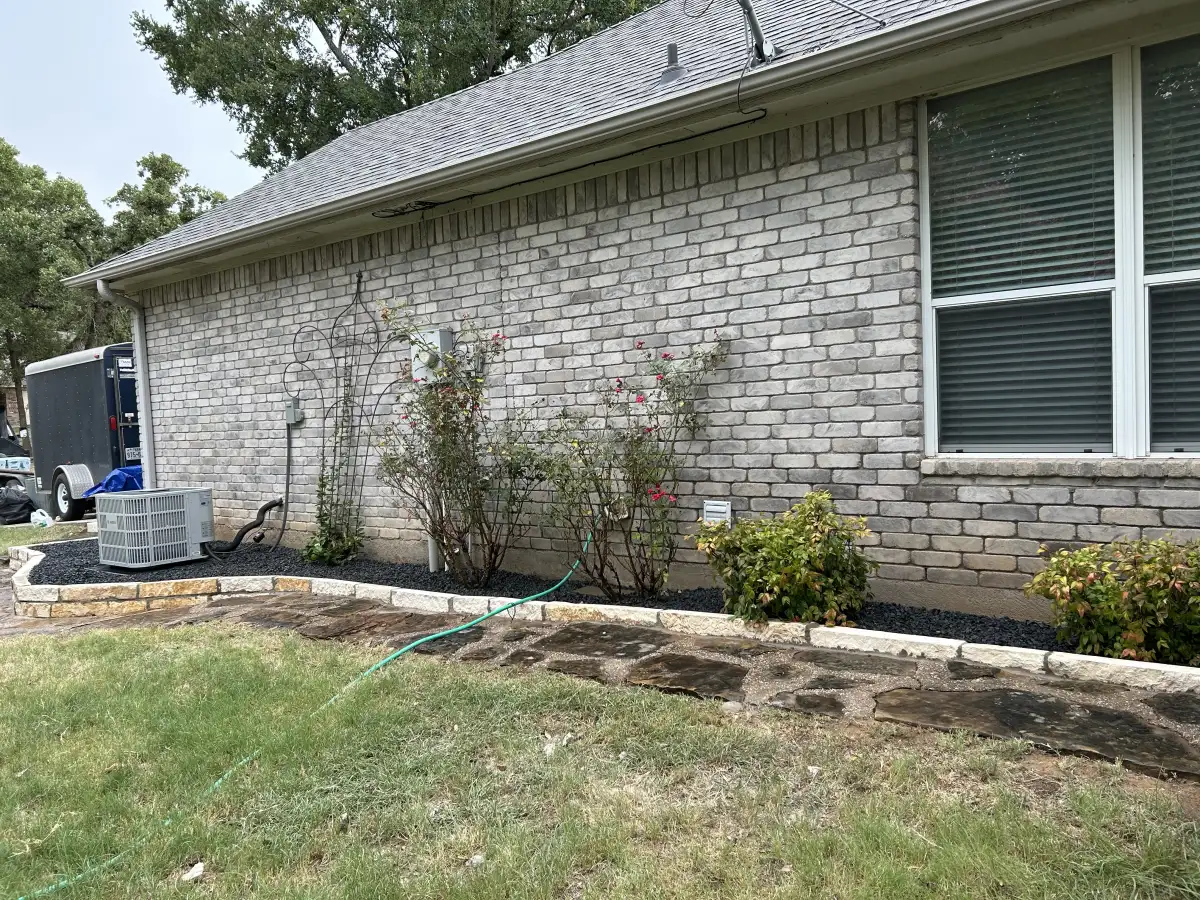
Dyed mulch — available in red, brown, and black — maintains a more consistent color longer than natural mulch because the dye resists UV fading. However, dyed mulch is typically made from recycled wood products (pallets, construction debris) rather than bark, which means it decomposes less predictably and may contain contaminants that introduce unwanted chemicals into the soil. For custom flower beds where plant health is a priority, we generally recommend natural bark or cedar over dyed alternatives. If color consistency is the primary concern, black-dyed mulch is the safest option because the carbon-based dye is the most chemically inert.
Rock and Gravel Mulch
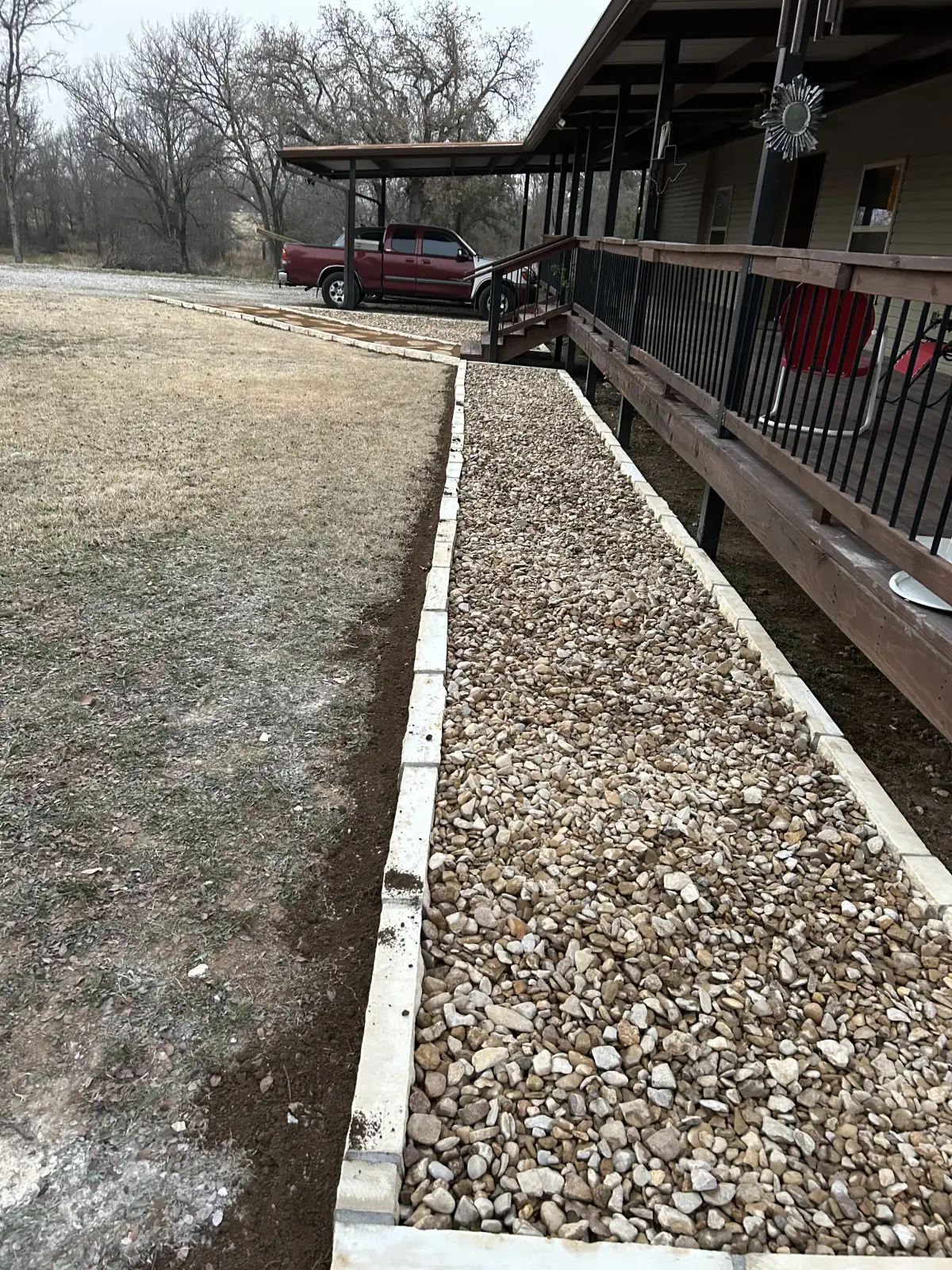
Decorative rock and gravel do not decompose like organic mulch and can reduce recurring material replacement. Rock works well in desert scape and hardscape-forward designs, along perimeter beds, and in some drainage-sensitive areas where flowing water would displace lighter material. The tradeoff is heat: rock absorbs and radiates warmth during Weatherford summers, and it does not improve the soil as organic mulch breaks down. Heavily planted perennial and shrub beds often benefit more from organic mulch.
How Deep to Mulch
The correct mulch depth for Weatherford beds is 2 to 3 inches. This is not arbitrary. It is the depth that research by the Texas A&M AgriLife Extension identifies as the sweet spot for weed suppression, moisture retention, and soil temperature moderation in Zone 8a conditions.
Less than 2 inches and you do not get adequate weed suppression. Sunlight penetrates the layer and weed seeds germinate underneath. More than 4 inches and you start creating problems — the mulch layer holds too much moisture against plant crowns and tree trunks, promoting crown rot, fungal issues, and bark decay. This is especially dangerous for trees. Mulch piled against tree trunks in a mound — commonly called a "mulch volcano" — is one of the leading causes of premature tree decline in residential landscapes throughout North Texas.
The Proper Technique
Pull mulch 3 to 4 inches away from the trunk of every tree and the crown of every shrub. The mulch ring should look like a donut, not a volcano. Taper the depth from the 2 to 3 inch standard at the outer edge of the bed down to bare soil at the base of the plant. This technique keeps roots cool and moist while allowing the trunk and crown to breathe and dry properly between waterings.
Refresh vs. Full Replacement
Most Weatherford properties benefit from a full mulch refresh once per year in spring, with a light top-up in late fall if beds look thin heading into winter. Full replacement — removing old mulch entirely and starting fresh — is typically only necessary every 3 to 4 years, or when old mulch has decomposed into a matted layer that repels water rather than absorbing it.
To determine which approach your beds need, pull back a section of existing mulch and check the depth. If you still have 1 to 1.5 inches of recognizable mulch underneath, a 1-inch top-up is sufficient to restore the 2 to 3 inch target. If the old mulch has broken down into a thin, compacted layer with visible soil, a full 2 to 3 inch application is warranted. If old mulch has formed a dense, water-repellent mat, remove it entirely, loosen the soil surface with a rake, and apply fresh material.
Preparing Beds Before Mulching
The work you do before spreading mulch determines how effective the application will be. Skip bed preparation and you are mulching over problems that will surface by midsummer.
Weed First
Remove all existing weeds by hand or with a hoe before mulching. Mulch suppresses new weed germination, but it does not kill established weeds. Crabgrass and nutsedge in particular will push right through a fresh mulch layer if their root systems are still intact underneath. For beds with heavy weed pressure, apply a pre-emergent herbicide after weeding and before mulching. The pre-emergent sits at the soil surface and catches seeds that make it through the mulch layer. Timing matters — the pre-emergent needs to go down before soil temperatures hit 65 degrees consistently, which typically happens in Weatherford during the last week of April.
Edge the Beds
Clean bed edges create a defined boundary that keeps mulch in the bed and turf grass out. A spade-cut edge or steel landscape edging works best for the Bermuda grass common in Weatherford lawns. Bermuda is an aggressive runner that will colonize any bed without a physical barrier. Re-edging beds annually before mulching prevents the gradual creep that makes beds look neglected by midsummer.
Amend If Needed
If your beds have not been amended in 2 or more years, spring mulching is a good opportunity to top-dress with compost before applying mulch. Spread 1 inch of quality compost over the bed surface and let the decomposing mulch layer work it into the soil naturally over the coming months. This is especially beneficial in Parker County's alkaline clay soils, where organic matter content is naturally low. The compost improves water infiltration, feeds beneficial soil biology, and slowly lowers the pH — creating better growing conditions for the native and adapted plants that perform best in Weatherford landscapes.
Common Mulching Mistakes in Weatherford
After years of installing and maintaining landscape beds across Parker County, we see the same mistakes repeated on property after property.
Mulching too late. Waiting until June or July means weeds are already established and heat stress is already damaging exposed root systems. The protection window is May. That is when mulch delivers its highest return.
Mulching too deep. Four, five, or six inches of mulch looks generous but suffocates roots, traps excess moisture, and creates a breeding ground for fungal pathogens. Two to three inches is the science-backed standard.
Piling mulch against trunks. Mulch volcanoes are epidemic in North Texas neighborhoods. The moisture held against the bark invites boring insects, promotes fungal cankers, and can girdle the trunk over time. Always leave a 3 to 4 inch gap.
Using the wrong material for the location. Cedar next to the home perimeter, hardwood bark in the planting beds, rock in the drainage areas. Matching mulch type to location ensures each material performs where it is strongest.
Skipping bed prep. Mulching over weeds, compacted soil, and eroded bed edges wastes time and material. Twenty minutes of preparation before mulching saves hours of maintenance later.
When to Call a Professional
Mulching a small front flower bed is a manageable weekend project. But for properties with extensive landscape beds — the kind typical of homes in Hudson Oaks, Willow Park, and the Aledo corridor — professional mulch installation saves significant time and delivers a more consistent result. A typical half-acre residential landscape with front and backyard beds requires 8 to 15 cubic yards of mulch, weighing 3,000 to 6,000 pounds. That volume is difficult to transport, stage, and spread evenly without commercial equipment and experience.
We handle mulching as part of our softscape and planting services. Every mulch installation includes bed preparation — weeding, edging, compost amendment where needed — followed by material selection matched to each bed's purpose and location, and application at the correct depth with proper clearance around all plants and trees. Most residential mulch projects complete in one day.
If your Weatherford, Aledo, Hudson Oaks, or Willow Park property needs spring mulching, schedule a free consultation with Dan. We will assess your existing beds, recommend the right material and depth, and handle the installation so your landscape is protected before summer arrives.