Lawn Maintenance in Weatherford, TX
Professional lawn maintenance keeps your Weatherford property looking sharp year-round with consistent mowing, seasonal fertilization, weed management, and edge trimming. L&L Landscape and Design provides reliable lawn care across Weatherford and Parker County — the same landscape expertise that builds premium outdoor spaces also maintains them.
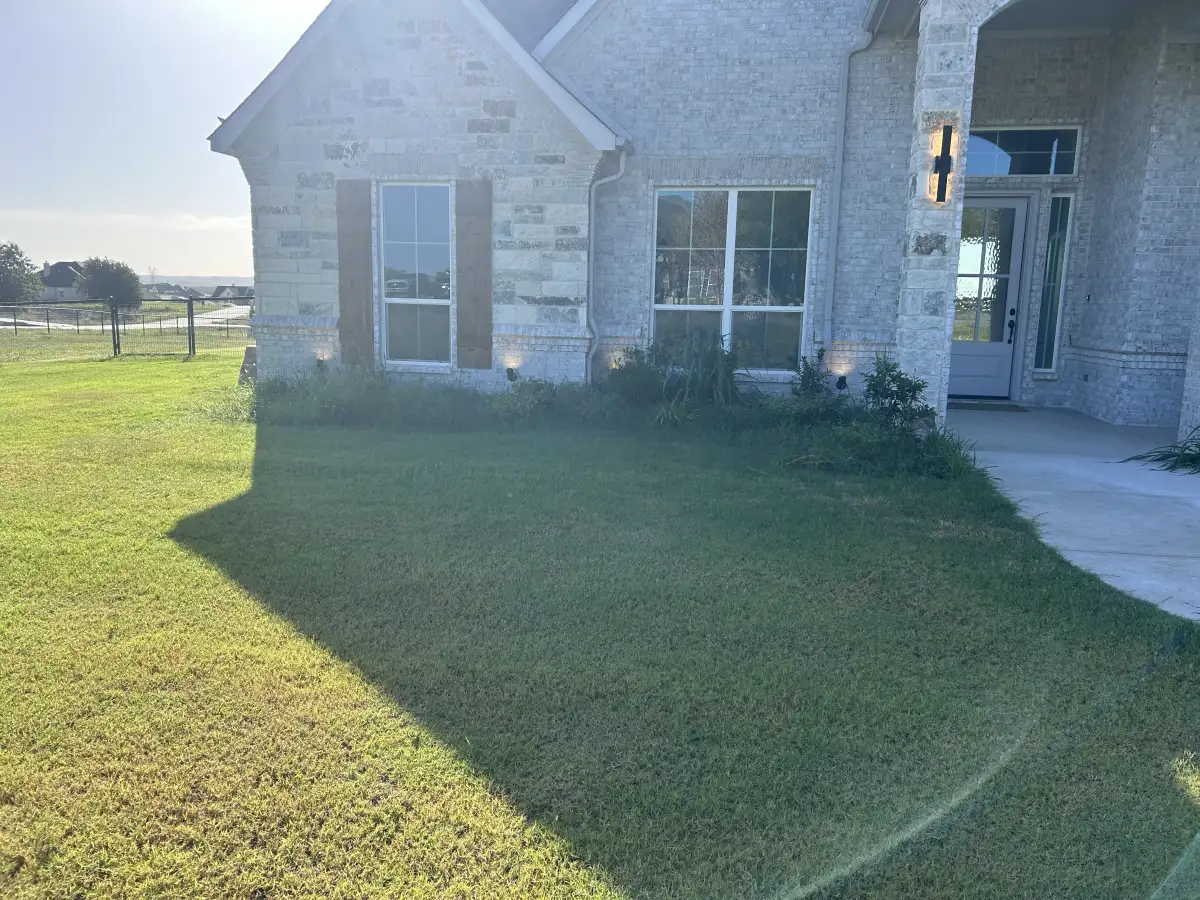
Lawn Care Designed for Parker County Conditions
Professional lawn maintenance in Weatherford requires understanding the specific turf grass varieties, soil conditions, and seasonal cycles that determine lawn health in Parker County. Bermuda grass — the dominant turf species in the region — grows aggressively from April through October and goes dormant (brown) from November through March. St. Augustine and Zoysia follow similar but slightly different seasonal patterns. Each grass type requires different mowing heights, fertilization timing, and watering schedules to maintain peak appearance and health.
L&L provides lawn maintenance as an extension of our landscape installation services. When we build a landscape — whether that includes new sod, flower beds, hardscape, or a complete design — ongoing maintenance ensures your investment continues to perform and appreciate over time. A well-maintained lawn increases property value by 15 to 20 percent according to the National Association of Landscape Professionals, and professional maintenance preserves that value better than sporadic DIY care.
Our maintenance approach goes beyond basic mowing. We adjust mowing height by season (higher in summer to shade roots, lower in spring to encourage density), alternate mowing patterns to prevent soil compaction and rut formation, and use sharp blades that cut cleanly rather than tearing grass tips. These details add up to a visually superior lawn that is also healthier and more drought-resistant.
Lawn Maintenance Services
Mowing & Edging
Weekly or bi-weekly mowing during the growing season (March through November) with string trimming along beds, walkways, and hardscape edges. We mow Bermuda at 1.5 to 2 inches during spring and fall, raising to 2.5 to 3 inches during peak summer heat to shade roots and retain soil moisture. St. Augustine is maintained at 3 to 4 inches year-round. Clippings are mulched back into the lawn to return nitrogen to the soil — a practice that reduces fertilizer needs by up to 25 percent per year.
Fertilization Program
Parker County's alkaline clay soil requires a targeted fertilization schedule that accounts for pH levels and seasonal growth patterns. We apply slow-release nitrogen fertilizer in late spring after Bermuda greens up, a second application in mid-summer to sustain growth through the hottest months, and a fall application to build root reserves before dormancy. Soil pH management — including iron supplementation to prevent chlorosis in alkaline conditions — keeps turf green and vigorous throughout the growing season.
Weed Control
Weed management in Weatherford starts with pre-emergent herbicide applications in late February (before crabgrass and other warm-season annual weeds germinate) and again in September (before winter annuals establish). Post-emergent spot treatments address any breakthrough weeds during the growing season. We select herbicides appropriate for your specific turf type — products safe for Bermuda may damage St. Augustine, making proper identification essential. Healthy, dense turf maintained at the correct mowing height is the best long-term weed defense.
Seasonal Lawn Care Calendar for Weatherford
| Season | Tasks |
|---|---|
| Spring (Mar-May) | Pre-emergent herbicide, first fertilization after green-up, begin weekly mowing, scalp Bermuda in early March |
| Summer (Jun-Aug) | Raise mowing height, mid-summer fertilization, deep watering schedule, spot weed treatments |
| Fall (Sep-Nov) | Fall pre-emergent, fall fertilization, aeration if compacted, lower mowing height, leaf cleanup |
| Winter (Dec-Feb) | Dormant season — reduced mowing, winter weed spot treatment, equipment maintenance |
For a deeper dive into seasonal landscape care in the Weatherford area, read our complete seasonal landscape guide.
Complete Property Care
Sodding Services
Replace patchy or damaged turf with fresh sod for an instant lawn transformation.
Learn MoreMulching Services
Annual mulch refresh keeps landscape beds looking sharp alongside your maintained lawn.
Learn MoreAdditional Services
Fall cleanup, leaf removal, and seasonal property maintenance round out your lawn care program.
Learn MoreLawn Maintenance FAQs
During the active growing season (April through October), Bermuda grass in Weatherford should be mowed weekly. During peak summer growth, some properties benefit from mowing every 5 to 6 days. St. Augustine grows more slowly and can typically be mowed every 7 to 10 days. During dormancy (November through February), mowing frequency drops to bi-weekly or as needed. The key rule is never removing more than one-third of the grass blade height in a single mowing to avoid stressing the turf.
For Bermuda grass, the first fertilizer application should come in late April or early May — after the lawn has fully greened up and been mowed at least twice. Fertilizing too early stimulates top growth before roots are active, wasting nutrients and encouraging weed growth. A second application in late June sustains summer growth, and a fall application in September builds root reserves before dormancy. We use slow-release formulations that feed the lawn over 6 to 8 weeks per application.
Bermuda grass in Weatherford needs approximately 1 to 1.5 inches of water per week during summer, including rainfall. Deep, infrequent watering (twice weekly) promotes deeper root growth compared to light daily watering, which encourages shallow roots that are more vulnerable to drought stress. St. Augustine requires slightly more water — about 1.5 inches per week. During drought or watering restrictions, allowing Bermuda to go dormant (brown) is preferable to light watering — it will recover fully when adequate moisture returns.
Ready for Professional Lawn Care?
Schedule a consultation with Dan to discuss a lawn maintenance plan tailored to your Weatherford property.