Mulching Services in Weatherford, TX
Professional mulch installation suppresses weeds, retains soil moisture, and gives landscape beds a polished, finished appearance. L&L Landscape and Design provides mulching services across Weatherford, Aledo, and all of Parker County using cedar, hardwood, and decorative mulch varieties.
Why Mulching Matters in North Texas
Mulch is the single most cost-effective investment a Weatherford homeowner can make in their landscape beds. A properly applied 2 to 3 inch mulch layer reduces water evaporation by up to 25 percent, according to the Texas A&M AgriLife Extension Service — a significant benefit during Parker County summers when temperatures regularly exceed 100 degrees and watering restrictions may be in effect.
Beyond moisture retention, mulch regulates soil temperature. In Weatherford's extreme heat, exposed soil in landscape beds can reach 140 degrees at the surface, cooking shallow roots and stressing even drought-tolerant plants. A mulch layer insulates the soil, keeping root zone temperatures 10 to 15 degrees cooler during summer and warmer during winter freeze events. This temperature moderation extends the growing season and improves plant survival rates, particularly for new transplants establishing their first root systems.
Mulch also suppresses weed growth by blocking sunlight from reaching weed seeds in the soil. This natural weed barrier reduces the need for chemical herbicides and manual weeding — two of the most time-consuming landscape maintenance tasks for Parker County homeowners. Combined with weed barrier fabric beneath the mulch, a professional installation can reduce weed growth by 90 percent or more in the first season. Read our spring mulching guide for detailed timing and depth recommendations specific to Weatherford properties.
Mulch Types for Parker County Landscapes
Cedar Mulch
Cedar mulch is the premium choice for Weatherford landscape beds near the home's foundation. Its natural oils repel termites, ants, and other insects that pose a structural risk to North Texas homes. Cedar breaks down slowly — lasting 2 to 3 years before needing replacement — and releases a pleasant scent that many homeowners enjoy. The golden-brown color complements the warm stone tones found on most Parker County properties. We recommend cedar for all beds within 5 feet of the home's perimeter.
Hardwood Bark Mulch
Hardwood bark mulch is the most popular all-purpose option for interior landscape beds, tree rings, and flower bed installations. It provides excellent weed suppression and moisture retention at an accessible price point. Hardwood mulch decomposes over 12 to 18 months, adding organic matter back into Parker County's clay soil as it breaks down — a gradual soil improvement process that benefits plant health. Available in natural brown, dark brown, and black dyed varieties.
Decorative Rock Mulch
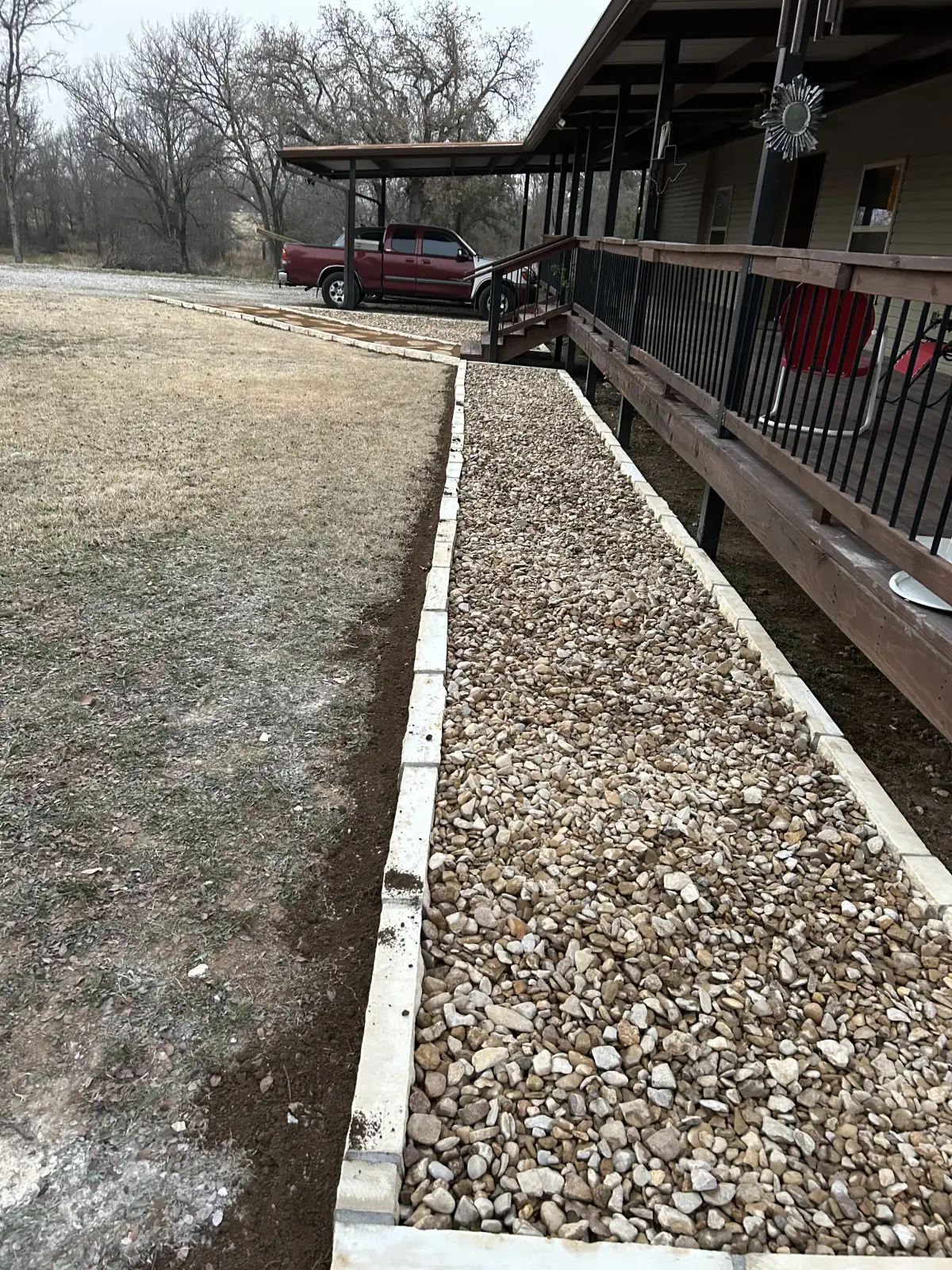
Decorative rock — including river rock, decomposed granite, and lava rock — offers a permanent mulch alternative for desert scape areas, pathways, and drainage-sensitive zones. Rock does not decompose or wash away during heavy rains, making it a low-maintenance long-term solution. Our client Rachel Ickert chose rock mulch for her beds and noted months later that "the different colors of the rocks become more apparent" over time, creating visual interest that improves with age.
How We Install Mulch Properly
Professional mulch installation goes beyond dumping bags into a bed and spreading with a rake. Improper mulching — particularly piling mulch against tree trunks or applying too thick a layer — causes more damage than bare soil in many cases. L&L follows best practices established by the International Society of Arboriculture and the Texas A&M AgriLife Extension to ensure every mulch application protects rather than harms your landscape.
Our process begins with bed preparation: removing old decomposed mulch (if excessive), clearing weeds and debris, and inspecting the weed barrier fabric for tears or gaps. We address any edging issues that allow grass to creep into the bed. New mulch is then applied at a uniform depth of 2 to 3 inches — deep enough to suppress weeds and retain moisture, but not so thick that it prevents water from reaching plant roots. Around tree trunks, we maintain a 3 to 4 inch clearance gap to prevent bark rot, forming a donut shape rather than the damaging "mulch volcano" that many inexperienced landscapers create.
For new bed installations, we lay commercial-grade landscape fabric before mulching. This fabric allows water and air to pass through to the soil while blocking weed growth from below. Combined with the mulch layer on top, this two-barrier approach provides maximum weed suppression with minimum ongoing maintenance.
When to Mulch in Weatherford TX
| Season | Best For | Why |
|---|---|---|
| Early Spring (March) | Annual refresh | Suppresses spring weed emergence before germination peaks |
| Late Fall (November) | Winter insulation | Protects root zones from December and January freeze events |
| After New Planting | Any season | Reduces transplant shock by moderating soil temperature and moisture |
I waited a few months to leave a review. Our experience with L&L was great. They were kind, professional, and provided good work. I love the rocks that we selected, and they are beautiful when it rains. Our plants seem happy and are growing and thriving!
Pair With Your Mulch Installation
Custom Flower Beds
Mulch installation pairs naturally with custom flower bed design and planting for a complete landscape refresh.
Learn MoreSoftscape & Planting
New plantings establish faster when protected by a proper mulch layer from day one.
Learn MoreLawn Maintenance
Combine mulching with seasonal lawn care for a complete property maintenance solution.
Learn MoreMulching FAQs
The recommended mulch depth for Weatherford landscape beds is 2 to 3 inches. This depth provides adequate weed suppression and moisture retention without preventing water from reaching plant roots. Depths exceeding 4 inches can create a moisture barrier that actually repels water away from the root zone. Around tree trunks, maintain a 3 to 4 inch clearance gap to prevent bark rot and fungal disease.
Cedar and hardwood mulch serve different purposes. Cedar is the better choice for beds near the home's foundation because its natural oils repel termites and other wood-destroying insects. It also lasts longer — 2 to 3 years versus 12 to 18 months for hardwood. Hardwood bark mulch is more cost-effective for large interior beds and adds organic matter to the soil as it decomposes. We often recommend cedar for perimeter beds and hardwood for the rest of the property.
Hardwood bark mulch should be refreshed annually in North Texas, typically in early spring before weed germination peaks. Cedar mulch lasts 2 to 3 years before needing replacement. Rather than removing old mulch entirely, we top-dress with fresh material to restore the recommended 2 to 3 inch depth. If the old mulch layer is excessively thick or compacted, we remove the excess before applying new material to prevent waterproofing the soil surface.
Ready for Fresh Mulch?
Schedule a free consultation with Dan to discuss mulch types, quantities, and timing for your Weatherford landscape beds.