By L&L Landscape and Design ·
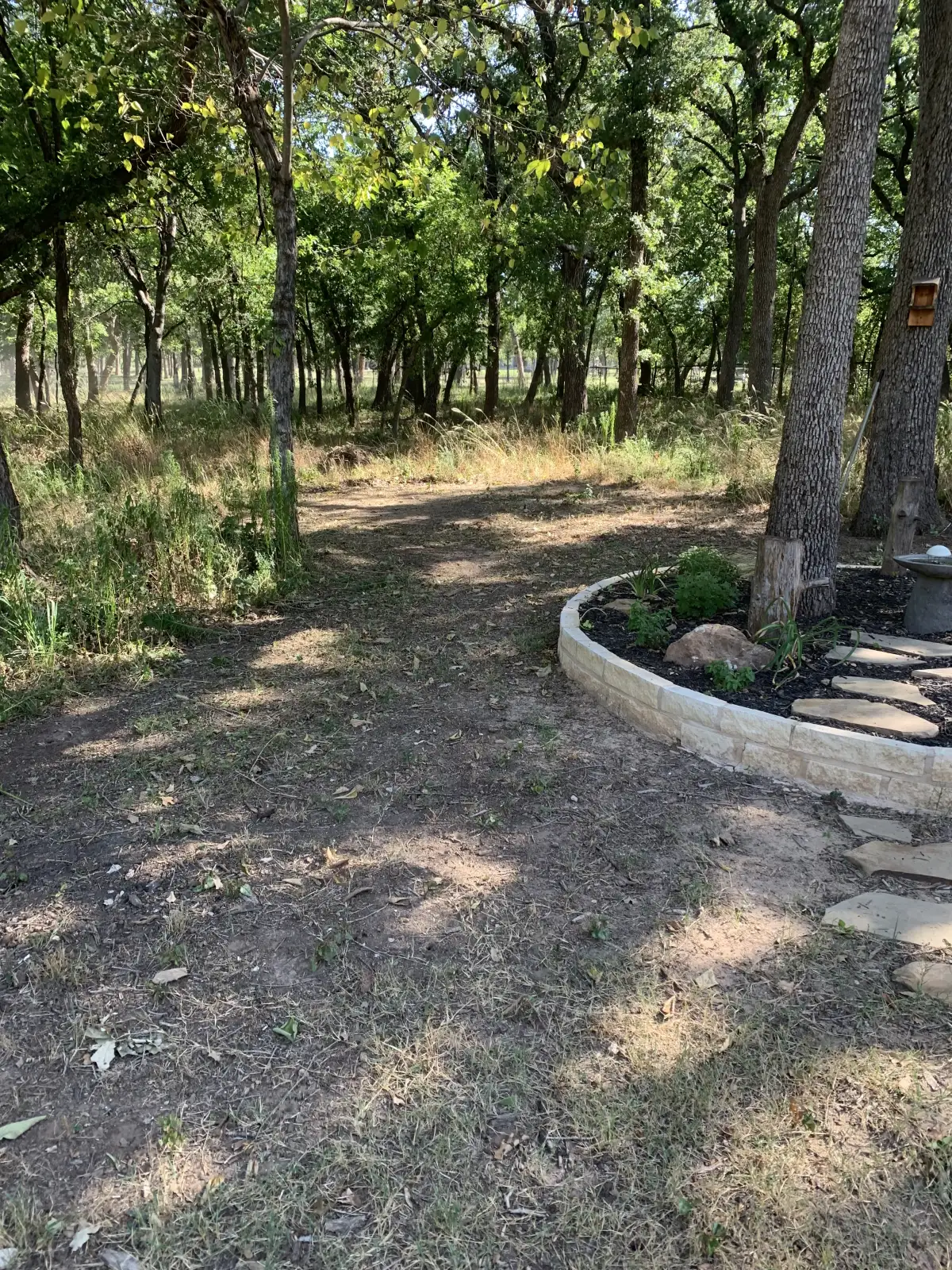
One published 2026 national cost guide places a broad planning range around $1,500 to $6,000 or more per acre. Treat that as orientation, not a Weatherford quote. Clearing one open acre of light brush is a different job from selectively opening a wooded acre, removing stumps, hauling debris, and leaving a smooth grade ready for sod or construction.
For a Weatherford-area property, the useful question is not only “How many acres?” It is “What work must happen inside that boundary, and what condition should the ground be in afterward?” L&L’s land clearing service covers the service itself; this guide explains the cost decisions to settle before you compare quotes.
The short answer: scope changes the price more than acreage alone
A fair estimate needs to identify the clearing boundary, vegetation density, trees or stumps involved, equipment access, debris plan, grading needs, and intended next use. If two quotes do not describe those items the same way, their totals are not yet an apples-to-apples comparison.
1. The amount and type of vegetation
Light brush, tangled undergrowth, small volunteer trees, and mature trees require different tools and different amounts of handling. Selective clearing can also take more care than removing everything because trees, fences, beds, structures, and other features must be protected. Before requesting a price, mark what stays as clearly as what goes.
2. Tree, root, and stump requirements
Cutting vegetation at ground level is not the same finish as removing or grinding stumps and addressing roots. The right scope depends on what comes next. A walking trail, maintained open area, lawn, driveway, planting bed, or future building area may each require a different level of below-grade work. Ask the estimate to state how stumps will be handled rather than assuming they are included.
3. Slope, soil condition, and water movement
Uneven ground, soft areas, erosion, and drainage paths affect how equipment can move and how the exposed soil should be left. Clearing also changes how rain reaches and travels across the ground, so the final plan should not treat runoff as an afterthought. Parker County’s stormwater guidance explains the broader importance of keeping waste and pollutants out of runoff. At the property level, it is worth deciding whether grading adjustments or drainage work belong in the same scope.
4. Equipment access and site protection
A wide, direct route to the work area is different from a narrow gate, tight side yard, steep approach, or route that crosses finished lawn and hardscape. Access affects equipment choice, production, and the amount of protection or repair that may be needed. Show the contractor gates, overhead branches, fences, septic components, irrigation, known utilities, and any surface that must remain undisturbed.
5. What happens to the debris
Cut material still has to be chipped, consolidated, hauled, or otherwise handled as permitted for the site. Stumps, logs, brush, and mixed debris do not all move or dispose of the same way. A lower quote may leave material on site while another includes loading and hauling, so the debris plan needs to be written into the comparison.
6. How finished the site needs to be
“Cleared” can mean vegetation removed with rough ground left behind, or it can include smoothing ruts, establishing a usable grade, preparing for the next contractor, and stabilizing exposed soil. Define the handoff condition before work begins. If the next step is landscape installation, your clearing and landscape design decisions should be coordinated so access, drainage, and finished elevations are not redone later.
Use this checklist when requesting a land clearing quote
Bring an approximate boundary, photos, a list of features to preserve, the intended use after clearing, known access or utility constraints, and your preference for debris handling. Then ask whether stump work, hauling, final grading, erosion control, cleanup, permits, and site restoration are included or priced separately.
Per-acre pricing versus a project price
Per-acre pricing can be useful when a large area has reasonably consistent conditions. It becomes less informative on a smaller residential job with selective work, difficult access, scattered trees, protected features, or a detailed finish requirement. A project price may better reflect mobilization and the actual sequence of work.
When you compare estimates, focus on the same defined outcome. Confirm the boundary and exclusions, how vegetation and stumps are handled, where debris goes, what grading or cleanup is included, and how an unexpected site condition would be approved. The clearest quote is the one that makes the finished condition easy to picture.
Weatherford Land Clearing Resources
Frequently Asked Questions
What is a normal price for clearing one acre in Texas?
There is no dependable one-acre price without defining the site and the finished condition. Vegetation density, tree and stump work, slope, access, debris handling, grading, erosion control, and permit or utility constraints can change the estimate substantially. An on-site quote is more useful than applying a broad statewide average to a specific property.
Is land clearing priced by the acre or by the job?
Either approach may be used, but acreage alone is rarely enough for a small or complex residential project. A job price can account for mobilization, access, selective work, debris handling, stump treatment, and the level of finish required. Compare the included scope, not only the pricing unit.
Is it cheaper to clear land yourself?
DIY work may cost less for limited hand-clearing of light brush when you have the right tools and can manage the debris safely. Equipment rental, transport, fuel, disposal, stump work, erosion control, utility risk, and site repair can narrow that difference on larger or more difficult areas. Trees, steep ground, uncertain utilities, or work near structures call for professional assessment.
How long does it take to clear an acre?
An acre is a measurement, not a complete work description. The schedule depends on vegetation, tree size and quantity, slope, soil and weather conditions, equipment access, debris handling, stump work, grading, and the finish expected after clearing.
What information helps a contractor prepare a land clearing estimate?
Share the approximate project boundary, what should stay, what should be removed, the intended use after clearing, known utilities or access limits, and whether debris removal, stump work, grading, or stabilization should be included. Photos help with an initial conversation, but an on-site review is the best way to define the scope.
Get a clearing estimate for the work your property actually needs
L&L serves Weatherford and surrounding Parker County communities. Share the area you want opened, what must remain, and what you plan to do with the ground next so the estimate can reflect a clear scope.