By L&L Landscape and Design ·
Booking landscape design is easier when you can describe the decisions the project needs to solve. Inspiration photos are useful, but they do not show how runoff crosses your yard, which areas receive afternoon sun, whether installation equipment can reach the work zone, or how much upkeep fits your routine.
For Weatherford homeowners, the most productive questions connect appearance with function. The plan may need to coordinate planting, lawn, paths, drainage, grade changes, retaining features, and outdoor living areas instead of treating each improvement as a separate purchase.
L&L Landscape and Design provides landscape design services throughout the Weatherford service area. Use this checklist to organize your priorities before requesting a property consultation.
Bring priorities, not a finished plan
Choose the one or two outcomes that matter most: a more welcoming entry, usable outdoor space, fewer high-maintenance areas, better circulation, healthier planting conditions, or a solution for water and erosion. Clear priorities give the design a useful starting point.
1. What problem should the landscape solve first?
Start with what is not working. Maybe the front approach feels unfinished, a slope is difficult to use, beds are hard to maintain, or the yard lacks a comfortable place to gather. Rank those concerns. When every idea is treated as equally urgent, the scope can grow before the main problem is clearly addressed.
Also identify the boundaries of the current project. Is the focus one entry bed, the front yard, a backyard living area, or a whole-property plan? That answer affects measurements, material transitions, access, and what should be reserved for later.
2. Where does water go during and after rain?
Walk the property during or just after rain when it is safe to do so. Note standing water, washed mulch, erosion, downspout discharge, soggy turf, and runoff that crosses a driveway or walkway. Photos are helpful because a dry appointment may not show the same conditions.
These observations can affect bed placement, finished elevations, sod preparation, pathways, patios, and retaining features. Ask whether the design should coordinate drainage installation or grading adjustments before finish materials are installed. Parker County’s public stormwater information also explains why runoff and the pollutants it can carry matter beyond a single property.
3. What existing conditions must shape the plan?
Document mature trees, utility locations, irrigation, septic components when present, fences, gates, roof drainage, doors, windows, existing concrete, and anything that must remain. Notice how sun and shade change across the day and where pets, guests, mowers, trash bins, and vehicles regularly move.
Access deserves special attention. Material deliveries and equipment need a workable route, and a future phase may need that same route later. A first phase should not accidentally block practical access to the rest of the yard.
4. How should plants be chosen for this exact location?
A plant list should respond to the conditions where each plant will live. Ask about available sun, irrigation reach, drainage, mature width and height, seasonal appearance, and the amount of pruning or cleanup expected. Spacing that looks sparse on installation day may be appropriate once plants mature.
For planting-led projects, compare the broader design with L&L’s custom flower bed services and planting services. The goal is to make beds, lawn, paths, and structures read as one landscape rather than disconnected additions.
5. What does “low maintenance” mean for your household?
Low maintenance is not one material or one style. It may mean less mowing, fewer seasonal changes, limited pruning, simpler bed edges, less leaf cleanup, or planting that fits the available sun and water. Be specific about the tasks you want to reduce and the care you are comfortable continuing.
Budget conversations should include ongoing care as well as installation. The University of Florida IFAS Extension’s landscape design guidance recommends considering both initial costs and long-term maintenance costs when planning a landscape. Ask what establishment care new planting or sod will require and how that routine changes as the yard matures.
6. Which materials fit the job they need to do?
Choose materials by function as well as appearance. A path needs to support the intended traffic. Bed edging should suit the desired maintenance routine. Mulch, rock, stone, sod, and paving each change how an area handles heat, debris, water, and foot traffic.
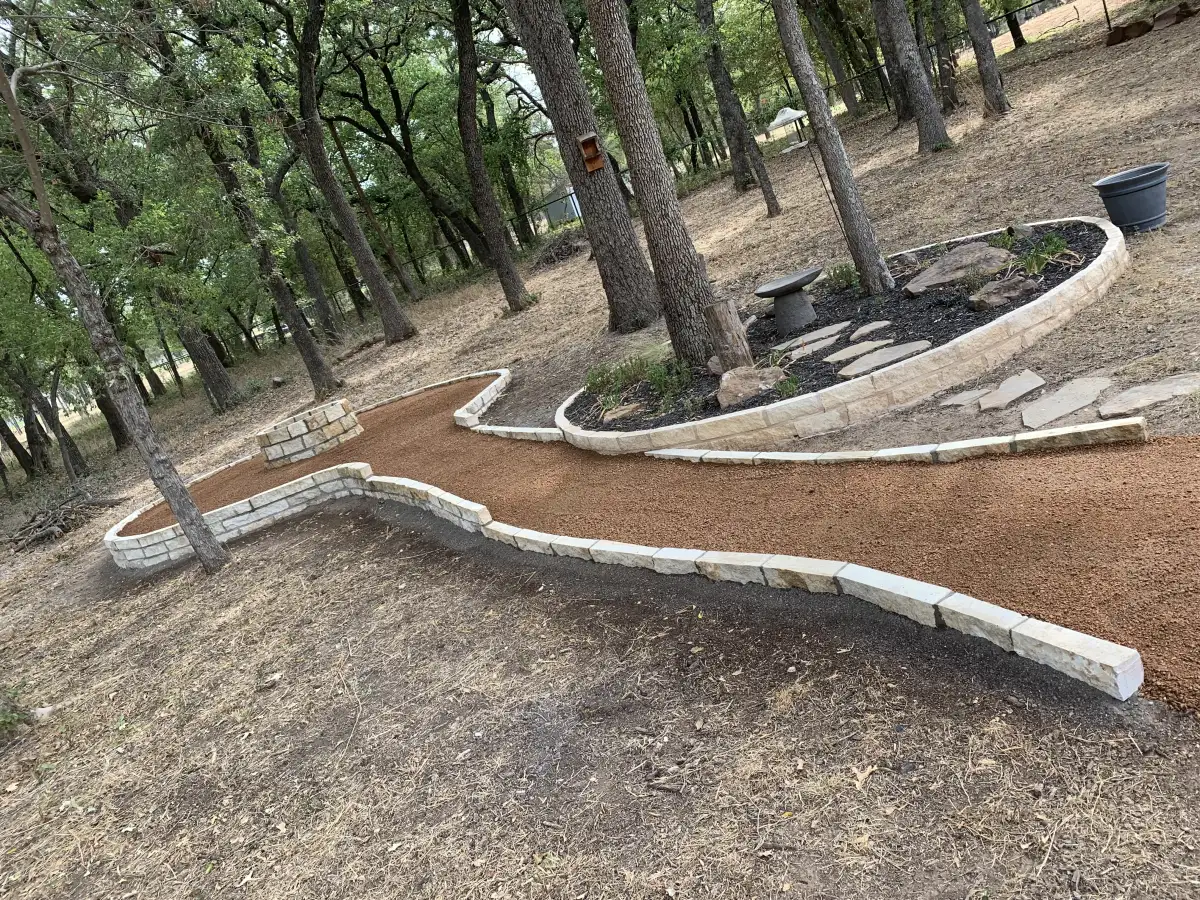
If the plan includes a patio, walkway, wall, or fire feature, ask how those elements connect to the surrounding landscape. The hardscape scope should coordinate finished elevations, drainage, base preparation, access, and transitions into planting or lawn.
7. Can the work be phased without undoing finished areas?
A whole-property direction can be useful even when the installation happens in stages. Ask which decisions must be made now, which areas can wait, and where each phase can end cleanly.
As a general sequence, work below grade, drainage, major elevation changes, utilities, permanent hardscape, and equipment access should be considered before delicate planting or final sod. The exact order depends on the property, but each completed phase should support what comes next.
8. What exactly is included in the proposal?
Compare scope, not just totals. A clear proposal should identify the included areas, design deliverables, revisions, site preparation, removal and haul-off, materials and quantities, planting sizes, drainage or grading work, installation, cleanup, exclusions, and allowances when applicable.
Ask which selections are final, what unknown conditions could change the work, and how changes are approved. For walls or other grade-sensitive features, make sure retaining wall construction, drainage, surrounding grades, and adjacent landscape work are considered together.
A short checklist for the first property walk-through
Bring your top priorities, the project boundaries, features that must stay, future plans, maintenance preferences, and photos of water movement. Note access limits and any dates or household routines the installation needs to respect.
Weatherford Landscape Design Resources
Frequently Asked Questions
What should I decide before contacting a landscape designer?
Decide which part of the property matters most, what is not working now, what must remain, and how much maintenance feels realistic. You do not need every plant or material selected before the first conversation.
Should drainage be discussed if my main goal is planting or a patio?
Yes. Standing water, erosion, downspout discharge, low areas, and runoff routes can affect bed placement, finished grades, paths, patios, sod, and retaining features.
What does low-maintenance landscaping mean in North Texas?
It depends on the household. Low maintenance may mean less mowing, fewer seasonal changes, limited pruning, simpler bed edges, plants suited to the available sun and water, or materials that fit the property's debris and drainage conditions.
Can a landscape design be installed in phases?
Yes, when the overall direction and installation order are considered first. Drainage, grading, underground work, major hardscape, and equipment access should be coordinated before delicate planting or final sod.
What should a landscape proposal explain?
It should clearly describe the included areas, design deliverables, preparation, materials and quantities, installation work, cleanup, exclusions, and how changes or unknown site conditions will be handled.
Talk through your Weatherford landscape
Tell L&L what you want to improve, what you have noticed after rain, and which future ideas the design should leave room for.