By L&L Landscape and Design ·
A landscape consultation is most useful when it moves beyond inspiration photos and identifies how the property already behaves. Where does rainwater travel? Which route does the mower use? What stays shaded in the afternoon? Which parts of the yard need to remain accessible? Those answers help turn an attractive idea into a plan that can work on the site.
Weatherford homeowners can review L&L’s landscape design service and Weatherford service area before the appointment. Then bring these six questions to the property walk so the conversation covers both the desired look and the decisions behind it.
Take notes when the property shows you the problem
Photos taken during or after rain can reveal runoff, low spots, washed mulch, and downspout discharge that disappear on a dry day. A few morning and afternoon photos can also document how shade changes. Pair those images with a short list of what must stay, what can change, and what you want the yard to make easier.
1. Are we fixing the cause or covering the symptom?
Bare sod, eroded bed edges, leaning borders, or a path that stays muddy may point to a water or grade issue rather than a surface-level planting problem. Ask what the contractor sees on the site and whether drainage or elevation changes should happen before finish materials are installed.
Parker County’s stormwater information explains that runoff can carry pollutants into drainage systems, creeks, and streams. On an individual property, the route water takes can also influence beds, sod, paths, patios, and retaining features. If runoff, standing water, or erosion is part of the concern, discuss how drainage installation or grading adjustments might relate to the landscape plan.
2. What can this exact location support?
Plant and material choices should respond to the conditions where they will be used. Walk through sun exposure, reflected heat, existing irrigation coverage, soil condition, tree roots, rooflines, and mature plant size. A bed beside a west-facing wall has a different job than one below a mature canopy, even when both are part of the same front yard.
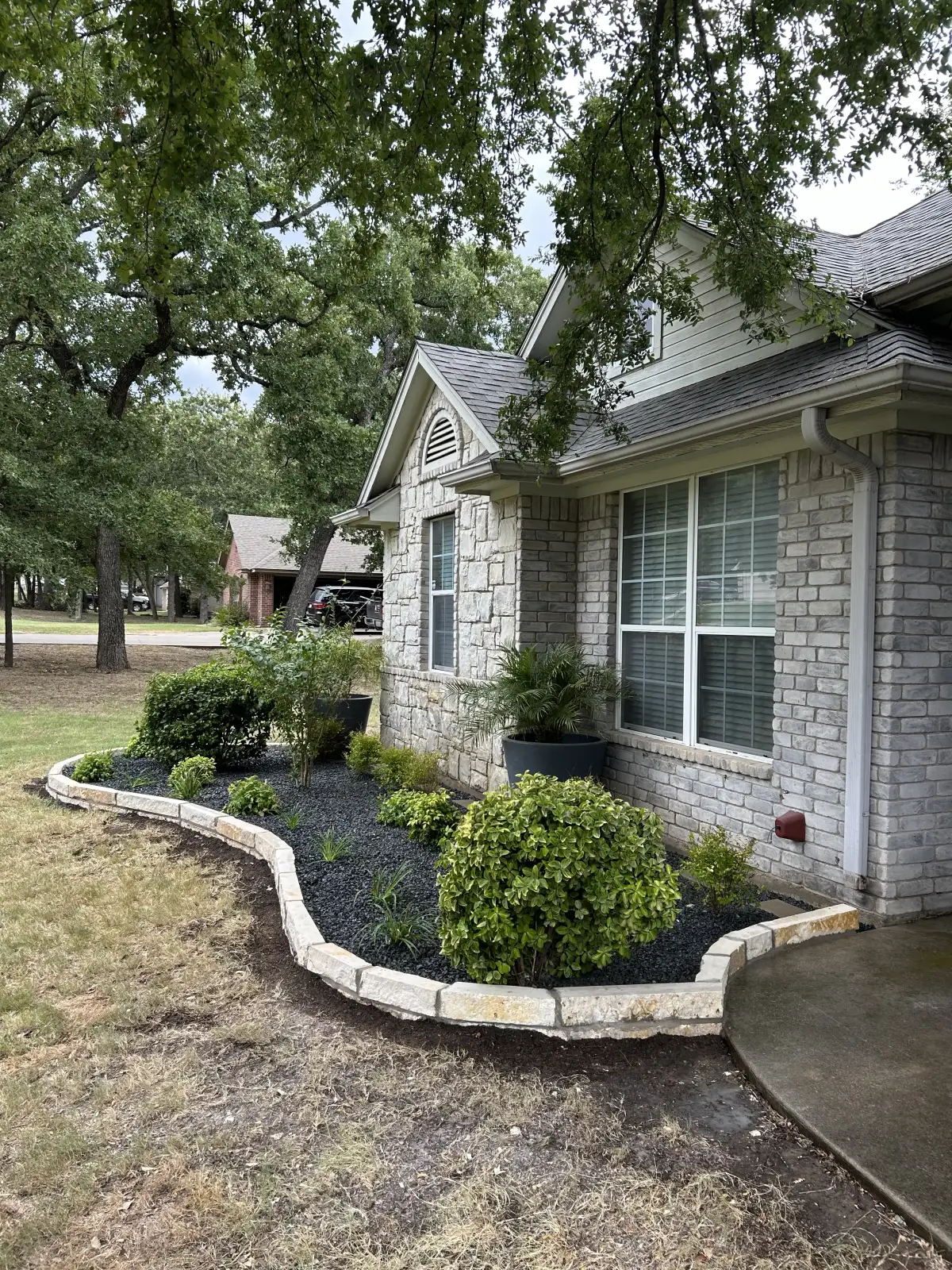
Talk about the result you want instead of arriving with every plant already selected. Screening, seasonal color, a cleaner entry, reduced mowing, or a more restrained planting palette each lead to different decisions. L&L’s planting services and custom flower bed service offer more context for planting-focused projects.
3. What needs to remain accessible?
Good circulation is not limited to the finished walkway. Installation may require a gate, driveway, side yard, or open lawn route for people, materials, and equipment. After the work is complete, the plan still needs practical access to utilities, irrigation components, outdoor equipment, trash bins, HVAC units, and areas that will be mowed or maintained.
Ask which access routes need protection during construction and which need to remain usable afterward. This is especially important when a future patio, retaining wall, or other hardscape project may be added in a later phase.
4. Which decisions have to be made for the whole property now?
A project can focus on one entry, bed, side yard, or outdoor living area without redesigning everything at once. However, water flow, finished elevations, underground work, main travel routes, and future connections may cross the boundary of that first phase.
Ask where the initial project can stop cleanly and what should be coordinated before installation begins. The goal is not to add more work to the first phase. It is to avoid placing new sod, planting, or edging where it will need to be disturbed when the next priority is addressed.
5. What does the proposal include before and during installation?
“Landscape design” can mean an on-site concept, a drawn layout, plant and material selections, or a more detailed plan tied to installation. Ask what you will receive, how revisions work, and whether the installation proposal is part of the same scope.
When comparing proposals, look beyond the total. Check the project boundary, preparation, removals, named materials, quantities or allowances, installation, cleanup, exclusions, and the process for approving changes. A clear scope makes it easier to see whether two proposals describe equivalent work.
6. What will the landscape require after installation?
Ask about both establishment care and the long-term routine. New sod and plants may need closer attention while they establish; later care may involve irrigation adjustments, pruning, mulch renewal, edging, seasonal cleanup, or mowing. The useful question is not simply whether a landscape is “low maintenance,” but which recurring tasks you want to reduce.
Discuss how plants will grow into the space and how beds will look between peak seasons. Mature height and width affect windows, paths, neighboring plants, and maintenance access. A plan should make sense as it develops, not only on installation day.
A focused consultation can still protect the long-term plan
Choose one immediate priority, but share future ideas before the scope is finalized. That gives the contractor context for drainage, access, elevations, and connections without forcing every improvement into one project.
Weatherford Landscape Design Resources
Frequently Asked Questions
Should drainage be discussed before landscape design begins?
Yes. If water collects, soil washes away, downspouts discharge into the project area, or existing beds stay unusually wet or dry, those conditions should be discussed before new sod, plants, paths, patios, or retaining features are placed.
What should I show during a Weatherford landscape consultation?
Show the areas you want to change, what must remain, where water moves after rain, sun and shade patterns, irrigation concerns, gates and access routes, utilities you know about, and any future feature the design should accommodate.
Can I design one area now and plan the rest later?
Yes. A focused first phase can work well when the plan also considers future drainage, access, finished elevations, utilities, and connections to later planting or hardscape areas.
How do I compare two landscape design proposals?
Compare the design deliverables, project boundaries, preparation, removals, named materials and quantities or allowances, installation, cleanup, exclusions, revision process, and how changes or unexpected site conditions will be approved.
Do I need to choose every plant before booking landscape design?
No. It is more useful to explain the look you prefer, how much maintenance you want, the areas that need shade or screening, irrigation conditions, and any plants you want to keep or avoid. Plant selections can then be evaluated for the site and the mature landscape.
Walk your Weatherford property with L&L
Share the areas you want to improve, the conditions you have noticed, and the maintenance you want the finished landscape to require. L&L can walk the site with you and define an appropriate design scope.