By L&L Landscape and Design ·
Booking landscape design is easier when you know which decisions belong at the beginning. For Weatherford homeowners, the first conversation should connect the way the yard is used with the conditions already shaping it: grade, runoff, clay soil, summer exposure, existing trees, access, and any permanent features that need to stay.
The goal is not to arrive with a finished plan. It is to give the designer a clear problem to solve. A front-yard refresh, a new outdoor living area, drainage correction, and a whole-property transformation each require a different scope. The questions below help you explain what matters, understand how the pieces relate, and decide whether a proposal addresses the full project.
L&L Landscape and Design offers landscape design services throughout the Weatherford service area. Use this guide before requesting a consultation so the discussion can stay focused on your property and priorities.
Start with three lists
Write down what is not working, what you want the space to make possible, and what may be added later. That simple exercise separates immediate needs from finish preferences and future phases.
Do you need a focused project or a whole-property plan?
A single problem area does not always require a complete redesign. Reworking an entry bed, improving a muddy side-yard path, or replacing a small lawn area can be a focused project. However, even a limited scope should consider anything connected to it. A new bed can affect surface drainage. A path can set a finished grade. Sod can be damaged if a future patio or drain line needs access through the same area.
Before booking, ask whether the immediate work can stand alone or whether it should be planned as one phase of a larger direction. If you expect a patio, retaining wall, fire feature, driveway change, or major planting project later, mention it now. A plan does not have to build everything at once, but it should avoid placing today's investment in the way of tomorrow's work.
Which site conditions should be discussed first?
Begin with conditions that can limit layout or change construction. Note low areas after rain, erosion, downspout discharge, strong afternoon sun, deep shade, tree roots, narrow gates, septic or utility locations, irrigation coverage, and the access route for materials or equipment. Photos taken during or soon after rainfall can be more useful than a dry-day description of a water problem.
In Weatherford, drainage and grade deserve an early look because new beds, sod, paths, patios, and walls can all change how water moves. If runoff or standing water is already part of the project, ask whether drainage installation or grading adjustments need to be settled before finish work.
How should hardscape and planting be planned together?
Hardscape sets movement, usable space, edges, and elevations. Planting adds shade, screening, seasonal interest, scale, and softness. Treating them as separate decisions can lead to narrow beds, awkward circulation, blocked views, or plants placed too close to permanent construction.
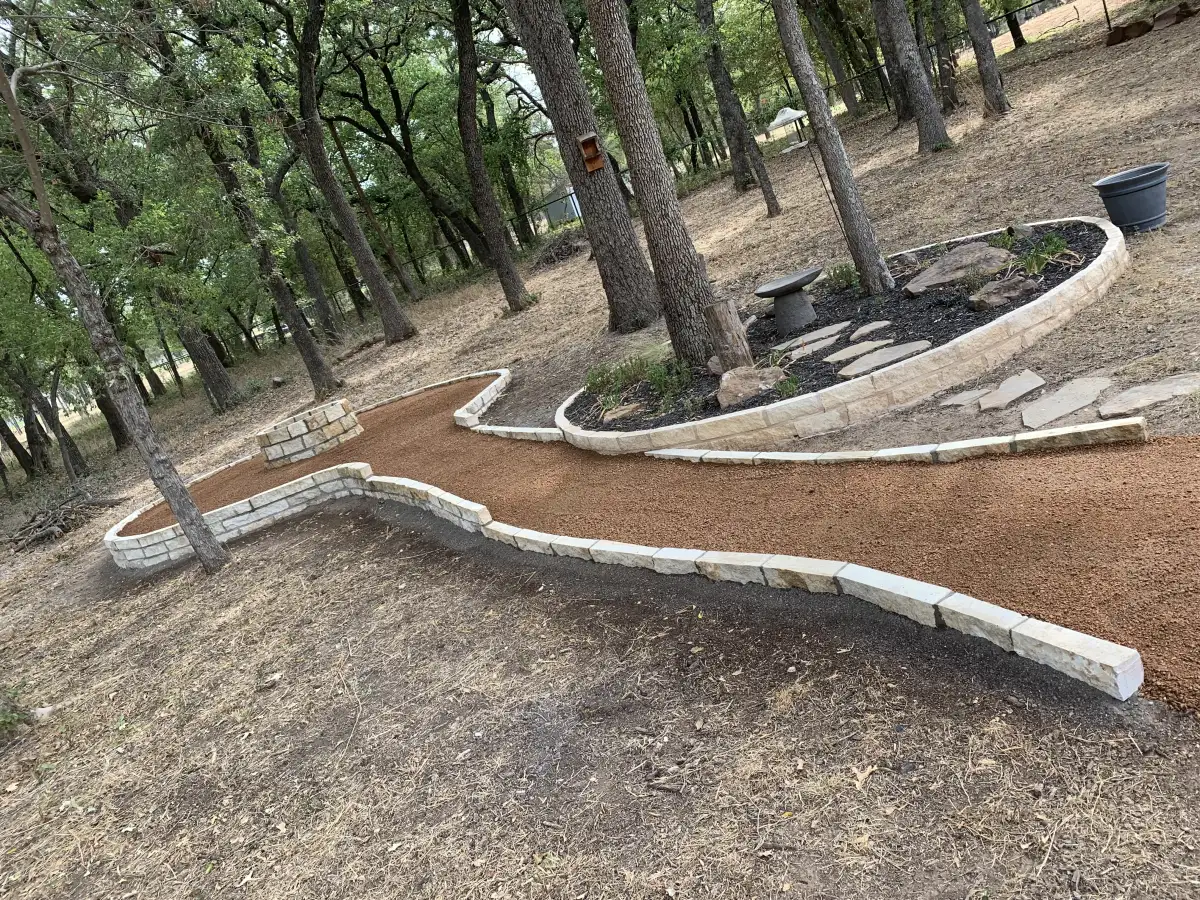
Ask where people will enter, walk, sit, gather, and maintain the space. Then consider which built elements establish that pattern. L&L's hardscape services include the permanent features that may influence the overall layout, while custom flower beds bring soil preparation, plant placement, edging, and finish material into the same design conversation.
What level of maintenance actually fits?
A landscape can be designed for a wide range of maintenance preferences, but the expectation needs to be stated clearly. Broad lawn areas, clipped shrubs, seasonal color, natural stone, loose rock, mulched beds, and layered planting each create different mowing, trimming, cleanup, watering, and refresh routines.
Ask how the plan will look after plants mature, not only at installation. Discuss spacing, water needs, leaf drop, pruning, bed-edge upkeep, and the establishment period for new plants or sod. If simplicity matters more than variety, say so. If a front yard should deliver strong curb appeal while the backyard stays relaxed and durable, make that distinction too.
How do budget priorities change the design?
You do not need a perfect number before the first conversation, but a working range or an ordered list of priorities helps keep options useful. Start with work that protects the property or prevents rework, then identify the improvements that change how you use the yard, followed by finish details that can be adjusted or phased.
When reviewing a proposal, look beyond the total. Ask what is included for removal, haul-off, site preparation, grading, base construction, drainage, edging, plant sizes and quantities, mulch or rock depth, sod preparation, and cleanup. Clear scope makes comparisons more meaningful and shows which choices could change the investment without undermining the plan.
Can the project be built in practical phases?
Phasing works best when each stage has a clear stopping point and the early work protects what comes next. Below-grade and grade-changing work usually needs attention before permanent surfaces and finish materials. A common logic is to address drainage, utilities, access, and major construction before installing delicate planting or new sod.
Ask what the yard will look and function like between phases. Also ask whether any later phase would require moving equipment across finished work or removing material installed earlier. A complete design can preserve the long-term direction even when the installation schedule is divided.
What should you bring to the consultation?
Prepare a short, useful set of information rather than a fully designed solution:
- the two or three problems that matter most;
- the way you want to use each area;
- features that must remain and additions you may want later;
- photos of recurring drainage, access, or exposure issues;
- a few reference images with notes about what you like; and
- your preferred maintenance level and project priorities.
This is enough to begin a productive property discussion. The designer's role is to evaluate how those goals fit the site, identify conflicts, and organize materials and construction into a workable direction.
Related Weatherford Landscape Resources
Frequently Asked Questions
Do I need a complete landscape design for one problem area?
Not always. A focused project can address one area, but it should still account for drainage, access, existing features, and future improvements that could affect the work.
Should I set a budget before a landscape design consultation?
A working investment range or an ordered list of priorities helps keep recommendations realistic. Homeowners can also identify must-do work, preferred improvements, and items that may be phased later.
Should drainage be discussed before planting or hardscape?
Yes. Existing runoff, low areas, downspouts, and grade changes should be reviewed before placing beds, sod, patios, paths, or retaining walls because those improvements can change how water moves.
What should I prepare before booking landscape design in Weatherford?
Prepare a list of problems and priorities, note the maintenance level you prefer, gather a few useful reference images, and record recurring site conditions such as standing water, strong afternoon sun, or difficult access.
Bring the whole project into focus
Talk with L&L Landscape and Design about the priorities, site conditions, and outdoor improvements you want to connect at your Weatherford-area home.