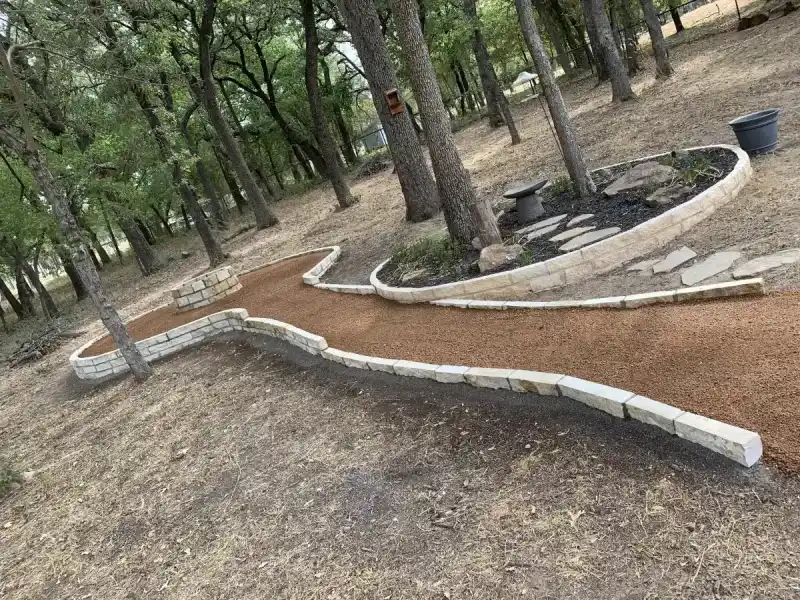
Retaining Wall Construction in Weatherford, TX
Retaining wall construction is the structural side of slope control: excavation, base preparation, drainage, wall material, backfill, and finish grading. L&L builds walls that manage Parker County terrain instead of simply covering it.
Walls Need More Than Attractive Stone
A retaining wall has a job to do. It holds soil, redirects surface water, creates usable space, and protects nearby landscape or hardscape improvements. In Weatherford and surrounding Parker County communities, heavy clay soil makes wall construction especially important. Clay can swell when saturated, shrink during drought, and push against walls that do not have proper drainage or backfill.
Construction methods and structural planning matter before the first stone is placed. L&L plans retaining walls around the way the wall will support a slope, connect with a patio, and manage water. The construction scope accounts for grade, base preparation, backfill, drainage, and the finish materials needed for a lasting result.
Dan Larson reviews each wall location on site before recommending a scope. A small garden wall, a slope-retaining wall beside a patio, and a wall protecting a driveway edge all require different decisions. We do not quote walls by looks alone; we look at height, soil, surcharge, drainage, access, and how the finished grade should behave.
What Goes Into a Proper Retaining Wall
Site Evaluation
We identify wall height, slope direction, drainage paths, nearby structures, access limits, and soil conditions before recommending materials.
Excavation and Base
A stable base is critical. We excavate for bearing, add appropriate base material, compact in lifts, and set the first course carefully.
Drainage Zone
Walls need a place for water to go. Gravel backfill, drain pipe, weep routes, or grading corrections may be included depending on the site.
Wall Batter and Alignment
The wall must lean, align, and step correctly for its material and height. Small errors in the first courses become large problems later.
Backfill and Compaction
Backfill is placed and compacted thoughtfully so soil does not settle unevenly or create new water problems behind the wall.
Finish Grading
The final grade should move water away from the wall and into a planned path, not trap it against the structure.
Choosing a Wall System
Natural stone walls fit many Parker County properties because they blend with local architecture and landscape materials. Segmental block walls can be useful where a more uniform system is needed. Boulders may work for informal grade transitions when there is room for proper placement. Timber is sometimes requested because it can appear less expensive at first, but it may not be the right long-term choice in wet or soil-contact areas.
The best wall system depends on height, purpose, budget, and site access. A low bed-retaining wall near an entry might prioritize appearance and clean lines. A taller wall supporting a patio needs stronger attention to drainage and structural requirements. A rural slope may benefit from boulders and grading that look natural rather than formal.
Where a wall connects to a patio, path, or fire feature, we coordinate with related services such as patio creation, natural stone hardscape, and grading adjustments so the wall is not treated as an isolated piece.
Where Retaining Walls Solve Real Problems
Sloped Backyards
Walls can create flatter lawn, planting, or patio zones where a slope previously made the yard difficult to use.
Driveway and Entry Edges
Grade changes near drives and front walks often need a clean wall to control soil and improve curb appeal.
Outdoor Living Areas
Patios and fire features need stable surrounding grades. A wall can make the living area feel level, framed, and intentional.
Erosion Control
When soil washes out after storms, a properly drained wall and grading plan can hold the area and direct water more predictably.
Site Questions That Shape the Wall Scope
Before construction begins, we ask what the wall must protect. A wall that supports a patio has different consequences than a decorative garden wall. A wall near a driveway may need to account for vehicle load and runoff from hard surfaces. A wall below a fence or slope may need special attention to soil pressure and water coming from uphill. Defining the wall's job helps determine whether the project is simple landscape construction or something that needs added engineering guidance.
Access also matters. Retaining wall work requires excavation, base material, stone or block delivery, backfill, and cleanup. Tight side yards, steep slopes, mature trees, and finished patios can affect how material is moved and how long the project takes. We review these constraints during the site visit so the estimate reflects real working conditions, not an ideal open lot.
Finally, we plan the finish grade. A wall that looks good but sends water toward the house, across a patio, or behind the wall will create problems later. L&L looks at where water should exit, where soil needs to be stabilized, and how nearby beds or pathways will meet the new wall. That planning helps the wall feel like part of the landscape rather than a separate structure dropped into the yard.
Questions About Building Walls
Not every small wall needs the same system, but every retaining wall needs a drainage plan. We decide based on height, soil, slope, and where water currently moves.
Sometimes. If the wall is only missing drainage or has minor movement, repair may be possible. If the base has failed or the wall is leaning badly, rebuilding may be the honest recommendation.
Height depends on materials, engineering needs, local requirements, and site conditions. We evaluate walls individually and will explain when a project needs additional design or permitting guidance.
Yes. Many patios need a wall to create a level area or frame the edge. Planning both together usually creates a better finished outdoor space.
Plan a Proper Retaining Wall Build
Schedule a free on-site assessment for retaining wall construction, drainage, and finish grading.