For a starting budget, HomeGuide’s national cost guide lists $50 to $150 per cubic yard for mulch with delivery and installation, compared with $25 to $100 for material alone. These are broad planning figures, not Weatherford market rates or an L&L quote. Bed preparation, access, material selection, and minimum charges can change your total.
If you are refreshing beds around your home in Weatherford or a nearby service area, this guide explains how to turn that range into a useful starting point. See our mulching services page for the service overview.
A 324-square-foot bed at 3 inches needs 3 cubic yards
$150–$450
Multiplying 3 cubic yards by the published $50–$150 installed range gives this illustrative starting budget. Significant weeding, removal, edging repairs, or a job minimum may put the final estimate outside it. Ask for a bed-specific estimate before setting your final budget.
Calculate the mulch you need before comparing prices
Measure the bed, not your whole yard. Break irregular beds into smaller rectangles and add their areas. Then use this calculation, also described in Texas A&M AgriLife Extension’s bed-gardening guidance:
Cubic yards = square feet × new mulch depth in inches ÷ 324
For example, 300 square feet needs approximately 1.85 cubic yards at 2 inches or 2.78 cubic yards at 3 inches. One cubic yard contains 27 cubic feet, equivalent to 13.5 bags labeled 2 cubic feet. Compare package volumes carefully.
AgriLife recommends a 2- to 3-inch mulch layer for raised landscape beds, tapering toward plant bases. That is the finished layer, not an instruction to add 3 inches every visit. If usable mulch remains, measure it before ordering a top-up. Excess buildup can require removal instead of more material.
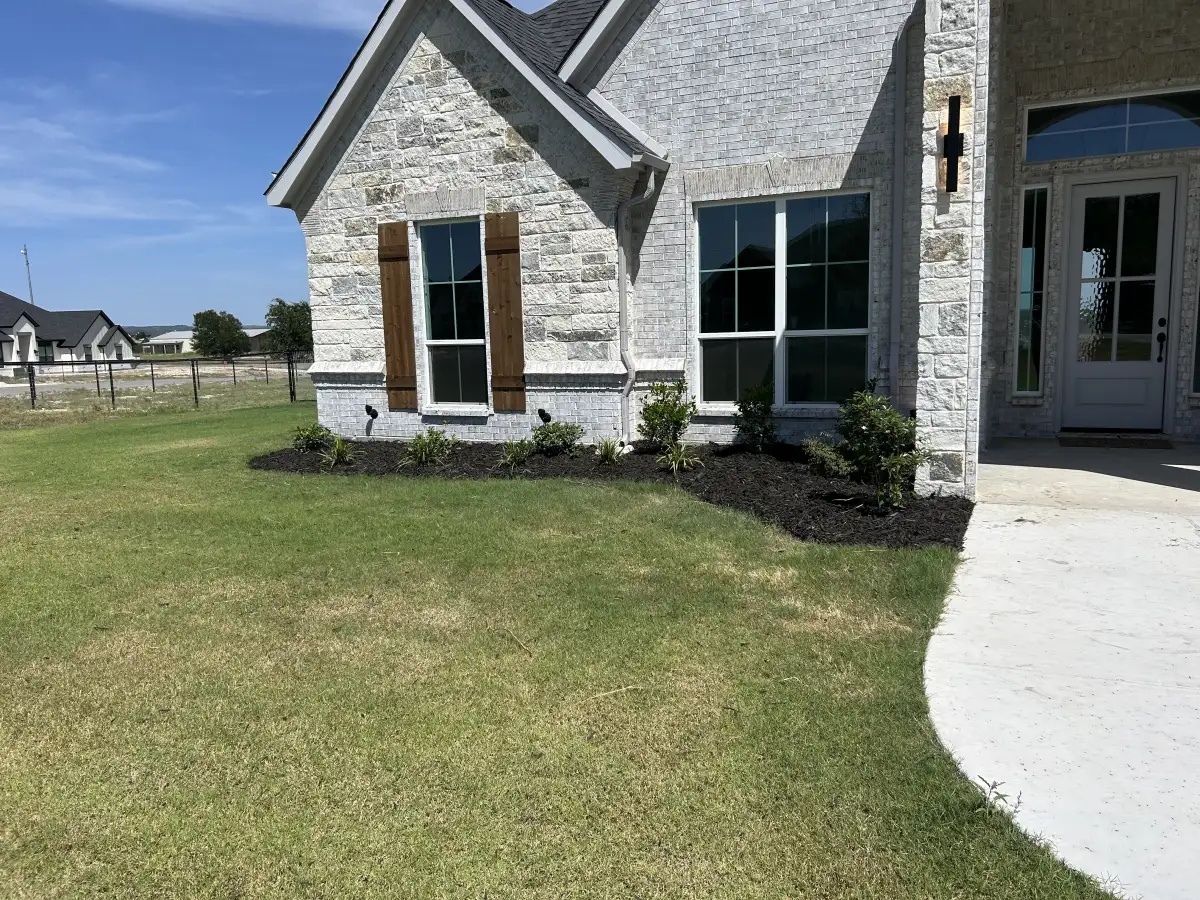
What changes the installed cost?
Material and delivery
Specify the mulch type and color so each quote prices the same product. Confirm whether it arrives bagged or in bulk, where it can be unloaded, and whether delivery is included. Rock and gravel are a separate material choice; compare them on their own installation scope rather than treating them as interchangeable with wood mulch.
The condition of your existing beds
A tidy bed needing a light refresh is different from one with established weeds, grass encroachment, accumulated mulch, or damaged edging. Ask for removal and disposal to be identified separately from spreading. If your plan includes new plants or custom flower beds, separate those costs so you can see what the mulch portion actually covers.
The route from the truck to the bed
A front bed beside the unloading point takes different handling than backyard beds reached through a narrow gate or across steps. Share gate widths, slopes, and the carrying distance. For a small job, ask whether a minimum charge applies before multiplying a per-yard figure by your material quantity.
Price drainage problems separately from a mulch refresh
If mulch repeatedly washes onto your walk or collects near a drain, show that area during the estimate. Adding another layer does not resolve the water’s route. Ask whether the bed needs edging changes or a separate drainage assessment before new mulch goes down.
Parker County’s stormwater guidance explains how roadside and private drainage ditches carry runoff toward creeks. Keep those flow paths in mind when discussing bed changes, and keep mulch out of drain openings. Treat any drainage work as its own scope rather than assuming it is included in the mulching price.
Compare the same finished job
Before approving an estimate, look for the measured bed area, mulch product, quantity, finished depth, preparation, delivery, spreading, disposal, and cleanup. Ask which items are excluded. A lower total may cover less preparation or less material; a higher total may include work your beds do not need.
For seasonal timing and material considerations, continue with our spring mulching guide. Use this cost guide to compare the dollars and scope.
Is forestry mulching the same service?
No. Forestry mulching processes standing brush and woody vegetation with machinery; garden-bed mulching spreads purchased material around plantings. Per-acre clearing prices and hourly forestry equipment rates do not describe a flower-bed refresh. If your goal is to open overgrown ground, start with land clearing and our land clearing cost guide to define the appropriate work.
Mulching Cost FAQs
How much does it cost to have mulch delivered and spread?
HomeGuide publishes a national planning range of $50 to $150 per cubic yard for mulch with delivery and installation. Your total depends on the material, quantity, preparation, access, and any minimum charge. This range is not an L&L price; request an estimate for your beds.
How much mulch covers 300 square feet?
At a new-material depth of 2 inches, 300 square feet needs about 1.85 cubic yards. At 3 inches, it needs about 2.78 cubic yards. Measure the existing mulch first so a refresh adds only the depth needed, rather than another full layer.
Does a mulch installation quote include weeding and old mulch removal?
Inclusions vary. Ask the estimate to specify weeding, edging, removal and disposal of excess material, delivery, spreading, and cleanup. A price for delivery and spreading alone is not the same scope as a full bed renovation.
Is buying bags cheaper than hiring a mulching service?
Compare the same material and volume, then include transport, preparation, carrying, spreading, cleanup, and your time. A bag price covers material; an installed quote covers a defined amount of work. Small, accessible beds and larger or difficult-access jobs can lead to different choices.
Get a mulch estimate for your beds
Send L&L Landscape and Design photos of your beds, approximate measurements, your preferred material, and any access or cleanup concerns. Include your location so we can discuss the work at your Weatherford-area home.