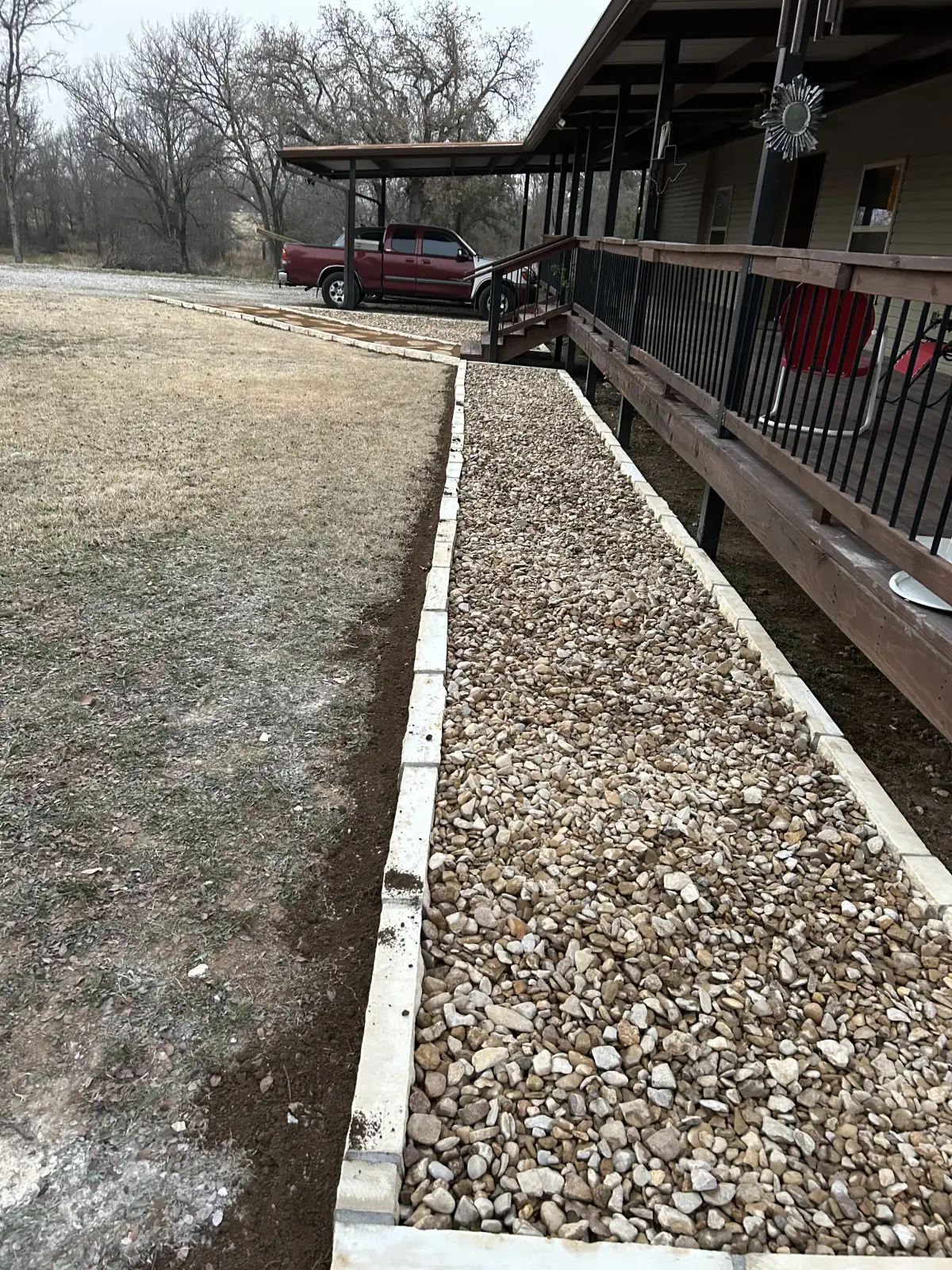
Mulch Installation for Weatherford Beds
Mulch installation is the hands-on bed preparation, edging, depth control, and finish work that makes mulch perform. L&L installs cedar, hardwood, and specialty mulch with careful soil prep and clean edges across Weatherford and Parker County.
More Than Spreading Bags Over Weeds
Good mulch installation starts before the first yard of material is spread. Beds need debris removed, weeds pulled or treated, edges cleaned, and existing mulch evaluated. If old mulch is matted, too deep, or mixed with leaves, adding more material can create drainage and plant-health problems. L&L prepares the bed so the new mulch layer protects the soil without smothering plant crowns.
L&L helps homeowners compare mulch types and seasonal timing, then handles the details that make the material perform: setting the right depth, feathering mulch around stems, keeping it off siding and trunks, and leaving beds with a clean finished line.
In Weatherford, mulch is especially useful because Parker County clay dries hard in summer and sheds water during heavy storms. A properly installed mulch layer moderates soil temperature, slows evaporation, reduces splashback, and gives young plantings a better chance to establish.
How We Install Mulch
Bed Cleanup
Leaves, sticks, old plant debris, and visible weeds are removed so the finished bed is clean underneath the new material.
Edge Reset
We sharpen natural edges or work against existing steel, stone, or concrete borders so mulch stays contained and the bed shape reads clearly.
Depth Control
Most beds need two to three inches of mulch after settling. We avoid piling mulch against trunks, stems, walls, or weep holes.
Final Grooming
The surface is raked smooth, high spots are corrected, and walkways, patios, and lawn edges are cleaned before we leave.
Mulch Areas We Commonly Refresh
Home Perimeter Beds
Front and side beds need a consistent depth that looks tidy from the street while keeping mulch away from siding and brick weep holes.
Tree Rings
Mulch rings reduce mower damage and competition around trees, but they must be kept away from trunks to prevent rot and insect pressure.
Flower Beds
Annual and perennial beds benefit from a smooth mulch layer that suppresses weeds without burying low-growing plants.
Backyard Borders
Fence-line beds and outdoor living borders collect leaves and soil. We reset the area before fresh mulch goes down.
New Plantings
Freshly installed shrubs, grasses, and perennials need mulch to hold moisture while roots adapt to the site.
Phased Projects
If a larger landscape project is being phased, mulch can stabilize finished beds while future hardscape or planting waits.
Choosing the Right Mulch for the Bed
Cedar mulch is popular for its color and scent, and it performs well in many front beds. Hardwood mulch gives a natural look that blends with shrubs, shade beds, and larger planting areas. Dyed mulch can provide a specific color, but it should be chosen carefully so it complements the house and does not overpower plant texture. For some low-water designs, decorative stone may be a better surface, but stone behaves differently and should not be treated as a direct replacement for organic mulch in every bed.
We help homeowners choose based on the bed's purpose, exposure, maintenance expectations, and nearby materials. A shaded bed under mature trees may call for a different finish than a hot west-facing home perimeter bed or a new ornamental planting near a patio. When mulch is paired with custom flower beds, we select material that supports the planting style instead of treating mulch as an afterthought.
How Mulch Installation Affects Plant Health
Mulch protects plants when it is installed as a controlled layer, not when it is piled high for a quick color change. Around shrubs and trees, we pull material back from stems and trunks so bark can breathe and crowns do not stay wet. Around perennials, we feather the layer so low growth is not buried. Along slabs, we keep the finished height below weep holes and siding. These details are easy to miss, but they matter through a full Weatherford summer.
Bed preparation also affects weed pressure. If weeds are cut off at the surface and immediately covered, many will return through the new mulch. We remove visible weeds and debris first, then reset the edge so grass does not creep into the bed. Where fabric already exists, we inspect whether it is helping or causing problems. Old fabric can trap soil and weed seed on top, especially in beds that have been refreshed many times. Dan will point out when fabric should be repaired, removed, or left alone.
Mulch choice affects both appearance and temperature. Dark mulch can create a crisp contrast near lighter stone or brick. Natural hardwood blends into shaded beds and larger rural landscapes. Cedar can be a good fit for front beds where color and scent are priorities. The installation plan considers how the material will look on day one, how it will settle, and how easy it will be to refresh later without creating an overly deep bed.
Questions Before We Install
Most landscape beds perform well with two to three inches after settling. Too little mulch does not suppress weeds well; too much can hold excess moisture and bury plant crowns.
Sometimes. If the old layer is thin and healthy, we may topdress it. If it is matted, sour, too deep, or full of debris, removal or thinning is better.
Yes. Mulch reduces evaporation and helps soil temperatures stay more stable, which is helpful during Weatherford summers.
Yes. Pairing cleanup and installation usually produces the best result because beds are clean before the new material is placed.
Need Professional Mulch Installation?
Request a free estimate for bed cleanup, edge reset, mulch delivery, and installation.